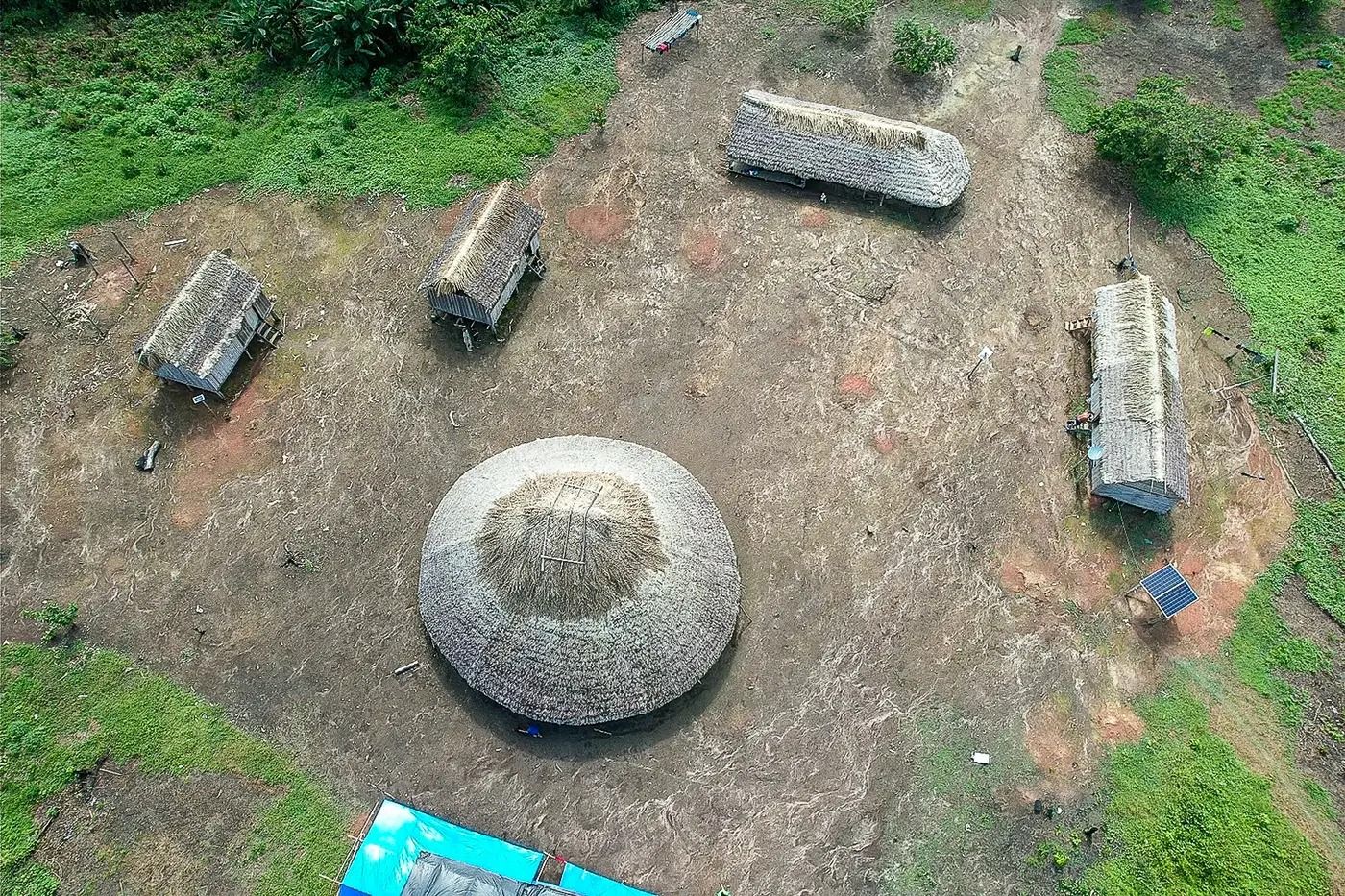
“When we arrived here, it was a desert, nobody lived there. Only later, did other people arrive, settling in, and the Instituto Nacional de Colonização e Reforma Agrária (INCRA) [National Institute for Colonization and Agrarian Reform] began dividing the area into lots. My parents, my brother, who was a chief, and I fought hard for the recognition of our lands. It is a really great achievement and emotion for us to be able to get our territory back. Sometimes I cry, it seems like I can't even believe it, like I'm dreaming.”
The account comes from Maria do Socorro Munduruku, chief of the Sawré Jaybu village, one of the villages that make up the Sawre Ba'pim Indigenous Territory (TI), belonging to the Munduruku people, an area of 150,000 hectares in the municipality of Itaituba, in Pará. The TI was one of those that had a declaration decree signed during the United Nations Climate Change Conference (COP 30), in Belém, from November 10 to 21.
Alongside the Sawre Ba'pim Indigenous Territory, nine other Indigenous Territories (ITs) were declared during COP, and another four were ratified, which means several steps beyond the declaration phase within the slow and detailed process of demarcating Indigenous lands carried out by the Fundação Nacional dos Povos Indígenas (Funai) [National Indigenous Peoples Foundation]. By law, the process involves five main stages: identification and delimitation; declaration; physical demarcation; ratification; and registration with the Secretariat of the Union's Assets (SPU) and in the land registry. This entire process can take decades.
Of the 14 Indigenous Territories benefited during the climate event, six are in the Legal Amazon. In addition to Sawre Ba'pim, the Vista Alegre in Amazonas was declared, and the Kaxuyana-Tunayana , located in Pará and Amazonas; and Manoki, Uirapuru, and Estação Parecis, in Mato Grosso, were ratified.
FUNAI
According to Joênia Wapichana, president of FUNAI, Brazil has approximately 13.5% of its territorial extension officially demarcated as indigenous land. Of this total, about 98% are in the Brazilian Legal Amazon. "That is, most of the formally recognized indigenous lands are here," she detailed during COP 30.
"And why this scenario? This came after the 1988 Constitution, which brought a new approach to territorial rights, establishing criteria and characteristics of indigenous lands that consider anthropological, environmental, cultural issues and economic activities. In other words, when you demarcate indigenous lands, you have to consider all the aspects necessary to guarantee not only the physical but also the cultural survival of indigenous peoples," explained the president.
According to Instituto Brasileiro de Geografia e Estatistica (IBGE) [Brazilian Institute of Geography and Statistics], 428,000 people inhabit the Indigenous Territories in the Legal Amazon, in an area of almost 116 million hectares, representing 23% of the Amazonian territory. Of the 824 indigenous lands in different stages of the demarcation process in Brazil, 378 are located in the Amazon region.
According to Florêncio Vaz, coordinator of the Anthropology course at the Federal University of Western Pará (Ufopa) and an indigenous person of the Maytapu people, there are 430 Indigenous Territories (TIs) in the Amazon. “This number varies somewhat because it's necessary to consider lands recognized in some way by Funai, and what non-governmental organizations say about it, such as the Conselho Indigenista Missionário (Cimi) [Indigenous Missionary Council], the Instituto Socioambiental (ISA) [Socio-Environmental Institute] and the Coordenação das Organizações Indígenas da Amazônia Brasileira (Coiab) [Coordination of Indigenous Organizations of the Brazilian Amazon]. Of these 430, 115 are in some pre-homologation stage. That is, approximately a quarter of these lands are not homologated yet. It may seem like a small number, but these are lands in strategic and highly coveted positions. They are fundamental lands for maintaining the climatic balance itself,” points out the professor.
Announcement made at COP with record participation of indigenous people
The announcement of progress related to the demarcation of 14 Brazilian indigenous lands during COP 30 was no coincidence. The event was held in the Amazon, where most indigenous lands are concentrated. The climate conference had unprecedented participation of indigenous people, both Brazilian and foreign. It is estimated that 5,000 people have visited the event Spaces within the COP period, although those accredited for the decision-making space, the Blue Zone, were in a much smaller number: about 300. For comparison purposes, 300 was the total number of indigenous participants at COP 21 in 2015 in Paris, one of the highest numbers of indigenous participation in a COP before the one held in Belém.
In addition, the progress in the demarcation of the 14 Indigenous Lands was a response to the pressures of the indigenous movement present at COP 30, which held several demonstrations during the Climate Conference, demanding not only the demarcation processes, but also several other demands.
According to Joênia Wapichana, the announcement during COP was symbolic, considering what represents, and it was also a concrete result. “We are here discussing proposals to address this climate crisis. And the indigenous peoples brought a serious message, a message of life, that demarcating and protecting indigenous lands must be considered, in this scenario, where solutions to climate crises are being discussed. Indigenous territories contribute to climate balance, contribute to the protection of biodiversity, and have sustainable management of products that keep the forest standing. This needs to be protected, and the way to protect it is by demarcating the territories and giving legal security to these peoples. Demarcating is protecting life,” she declared.
For Professor Vaz, the announcement about the Indigenous Territories during COP was a response to the complaints of indigenous organizations. “We cannot deny that it represented a great advance. Many peoples were anxiously waiting. But many other lands already have the entire process ready, awaiting only for its approval, and have not progressed yet. Others, awaiting initial stages, have also not moved forward. "So, despite all this rather symbolic publicity in Belém, it was very little compared to what the Lula government itself promised," comments the Professor.
A major barrier against deforestation
The demarcation of indigenous lands not only provides legal security to native peoples and helps maintain their way of life, but also acts as a major barrier against deforestation. A survey by MapBiomas indicates that, in these territories, only 1% of native vegetation was lost between 1985 and 2023. These evidences make Indigenous Territories the most preserved areas in the country, ahead even of other protected areas, such as quilombola territories and conservation units. On the other hand, a study by the Socio-Environmental Institute (ISA) points out that undemarcated indigenous lands are the most vulnerable to deforestation, which decreases after the demarcation process: with regularization, there is a significant increase in vegetation regeneration, showing how indigenous forest management strategies can be great allies in the fight against climate change.
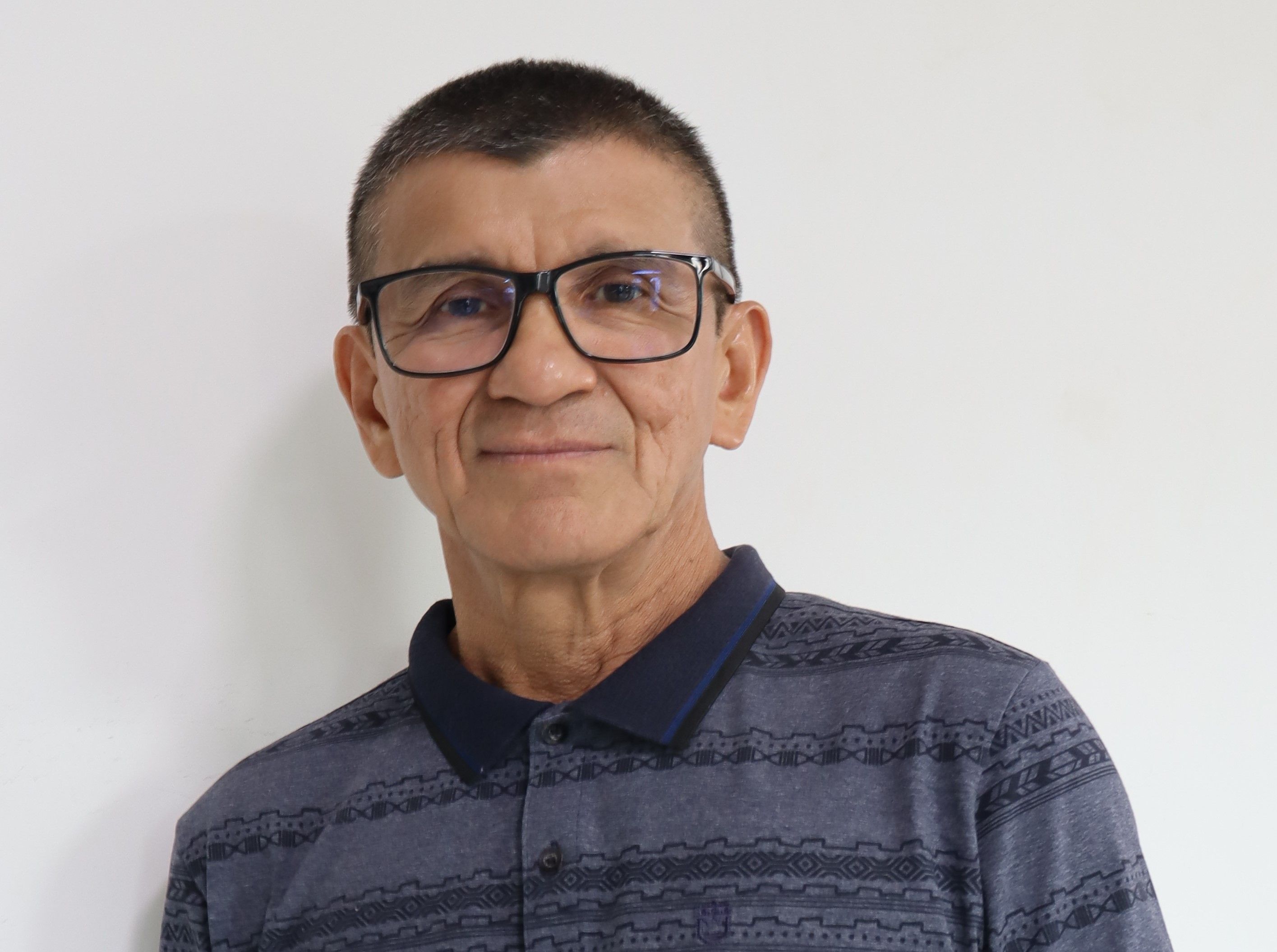
According to Vaz, by demarcating Indigenous Territories, the government is making a significant contribution to combating the climate emergency. “Demarcation is a right of Indigenous peoples, so that they can continue their cultural processes, their way of life, their relationship with each other and with the environment. Indigenous peoples need this territory, with everything it entails, because these are places of memory, places of their historical and cultural reproduction. But, beyond that, demarcation is very important to prevent the worsening of the climate crisis. Approximately 14% of the national territory guarantees environmental services, storing carbon and regulating the climate. Approximately 23% of the Amazon area corresponds to Indigenous lands. If all of them are demarcated, it will represent about a quarter of the Amazon with its nature preserved,” he argues.
“WE CARE”
Maria do Socorro Munduruku, from the declared Indigenous Land of Sawre Ba'pim, confirms the professor's assertion. “We, as Indigenous people, preserve, we care, we will reforest, planting açaí, bacaba, buriti, Brazil nut, cocoa, cupuaçu, cumaru, copaiba, andiroba. We will plant so that the game will come close again, because today, these animals are no longer here because of deforestation. We will show the government that we wanted the land for this purpose,” declares the chief.
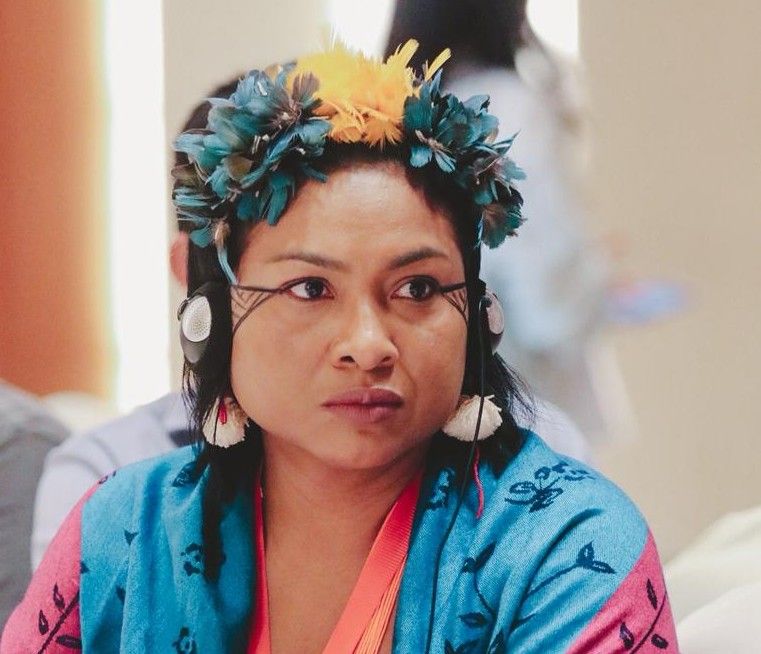
According to Angela Kaxuyana, a leader at the forefront of the demarcation process for the Kaxuyana-Tunayana Indigenous Land and a member of COIAB and the Kaxuyana, Tunayana and Kahyana Indigenous Association (Aikatuk), the demarcation guarantees not only the dignity for indigenous peoples to live in their territory according to their customs and way of life, but also makes an essential contribution to climate balance, biodiversity conservation, and the maintenance of rivers and forests.“These areas are even more efficient than the Integral Protection Units, which are conservation units where human life is not permitted. And this is not my opinion: science has already proven it. The demarcation of territories has global importance for humanity. Indigenous territories are the lungs of the planet. It is there that the most effective way to confront the climate crisis is found,” he emphasizes.
It was a 22-year wait
The homologation of the Kaxuyana-Tunayana Indigenous Land, an area of approximately 2 million hectares located in the municipalities of Faro and Oriximiná (Pará) and Nhamundá (Amazonas), marked the end of a 22-year wait, since the beginning of the demarcation process at Funai in 2003. But the struggle of the peoples who inhabit the territory, among them the Kahyana, the Kaxuyana and the Tunayana, is much older.
Angela Kaxuyana states that, in fact, it has been more than five decades of struggle. “It all started in 1968, when the military regime tried to ‘clean up’ the Amazon to make way for large-scale projects. It was an attempt to exterminate indigenous peoples. So, I usually say that our battle didn't start in 2003, with the request for recognition, but it's been going on for 57 years. The homologation is a historical reparation, for all the violence suffered, for having been torn from there,” says the activist.
According to Angela, homologation means a guarantee of rights. “First of all, it restores this sense of reclaiming the diversity that we are in the territory, which is home to many indigenous peoples, including isolated ones. "And it also gives that feeling of security, because public policies for the territory, including funding, revolve around this regularization," she points out.
FUTURE
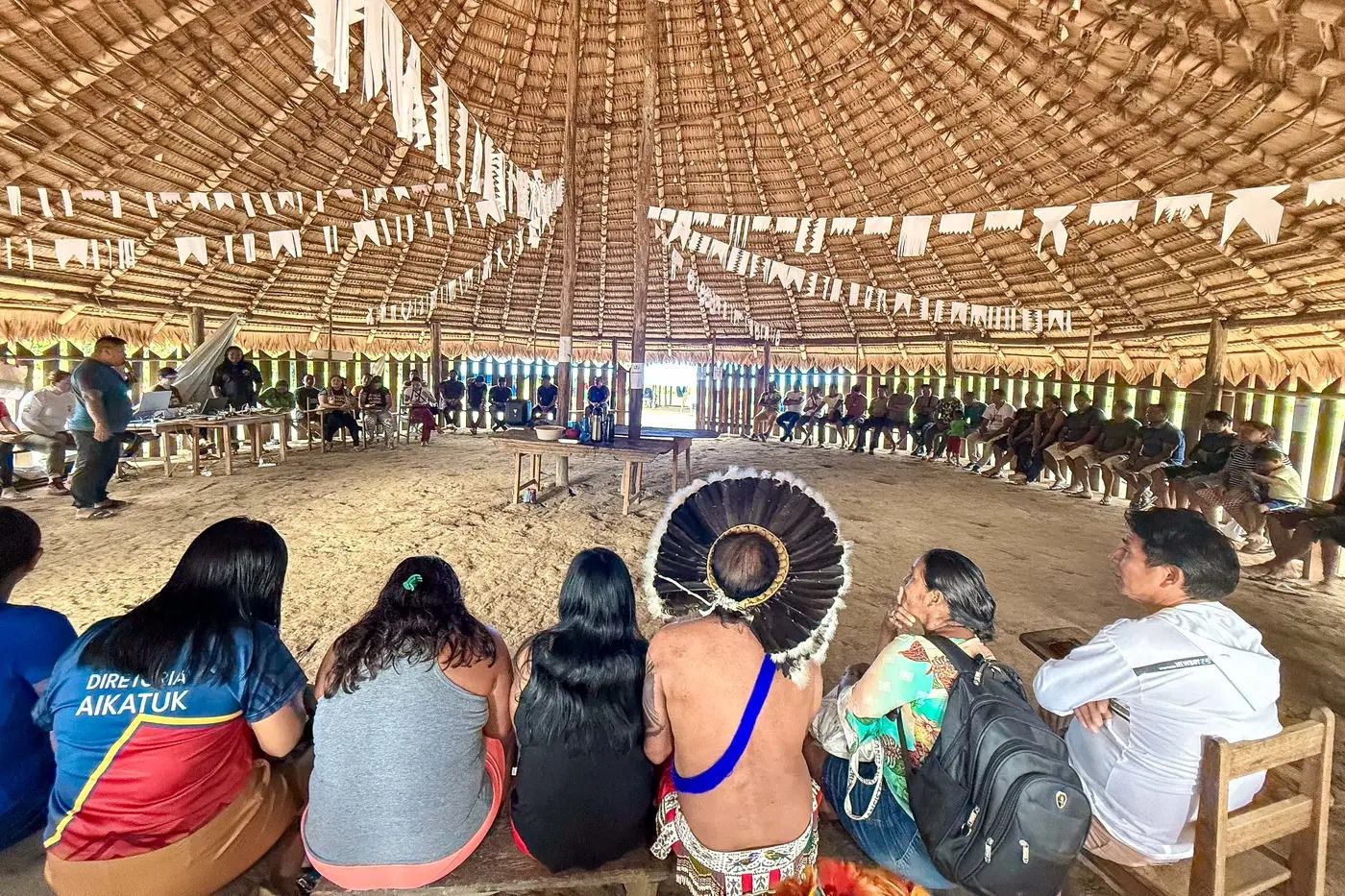
After the confirmation of the declaration or homologation stages, what do the indigenous peoples of these lands expect? For Maria do Socorro, there is still much to be done. “We need the homologation and, after that, to remove those who arrived here after us. And it's not just about demarcating and leaving it at that. We need monitoring from Funai and other agencies to have our guarantee. We really need security,” asks the chief.
Angela, on the other hand, hopes that, after the homologation, the peoples will receive public policies related to the type of territory. “We already have our life plan, our PGTA [Territorial and Environmental Management Plan], with actions that have an effect on the territory. What we want now is for the Brazilian State to comply with the legislation, to guarantee quality and differentiated education, differentiated health, and to assume its responsibility,” she says.
For Joênia Wapichana, president of Funai, COP 30 gave visibility to the issues raised by Maria do Socorro and Angela. “The Amazon COP made it clear that it’s not just about forests. It’s also a matter of human rights. These people deserve to be cared for, with the right to education, health, and security. It is necessary to protect those who protect the standing forest.”
INSTITUTIONAL PARTNERSHIP
The production of Liberal Amazon is one of the initiatives of the Technical Cooperation Agreement between the Liberal Group and the Federal University of Pará. The articles involving research from UFPA are revised by professionals from the academy. The translation of the content is also provided by the agreement, through the research project ET-Multi: Translation Studies: multifaces and multisemiotics.