Last month, a scientific journal specialized in paleontology, the Journal of Systematic Palaeontology, published a description of a new species of dinosaur discovered in Maranhão, an area of the Legal Amazon. Named Dasosaurus tocantinensis, due to the region where it was found, near the Tocantins River, this prehistoric species joins four others already found and described in the Amazon region, in addition to fossilized footprints that have also been identified.
The fossils of Dasosaurus tocantinensis were discovered by chance in 2021 in the municipality of Davinópolis during infrastructure construction work, but only now have the animal’s characteristics been fully described and published. The research was led by Elver Mayer, a biologist specializing in paleontology, from the Federal University of the São Francisco Valley.
Among the dinosaur's remains is a femur measuring about 1.5 meters, which allowed researchers to estimate that it was about twenty meters long—and had an enormous neck—making it one of the largest dinosaurs ever found in Brazil.
Meticulous work
The fossils of Dasosaurus tocantinensis were discovered during excavation work to grade the land for a road-rail terminal in Davinópolis. “Environmental licensing requires that the project be monitored by an archaeologist, and fortunately, that archaeologist recognized that there were fossils there, so I was called in. At first, we believed it was more recent material, from the Ice Age, perhaps a giant sloth. But after analyzing the site, which consists of very ancient rocks with such large fossils, we concluded it could only be a dinosaur,” says Elver Mayer.
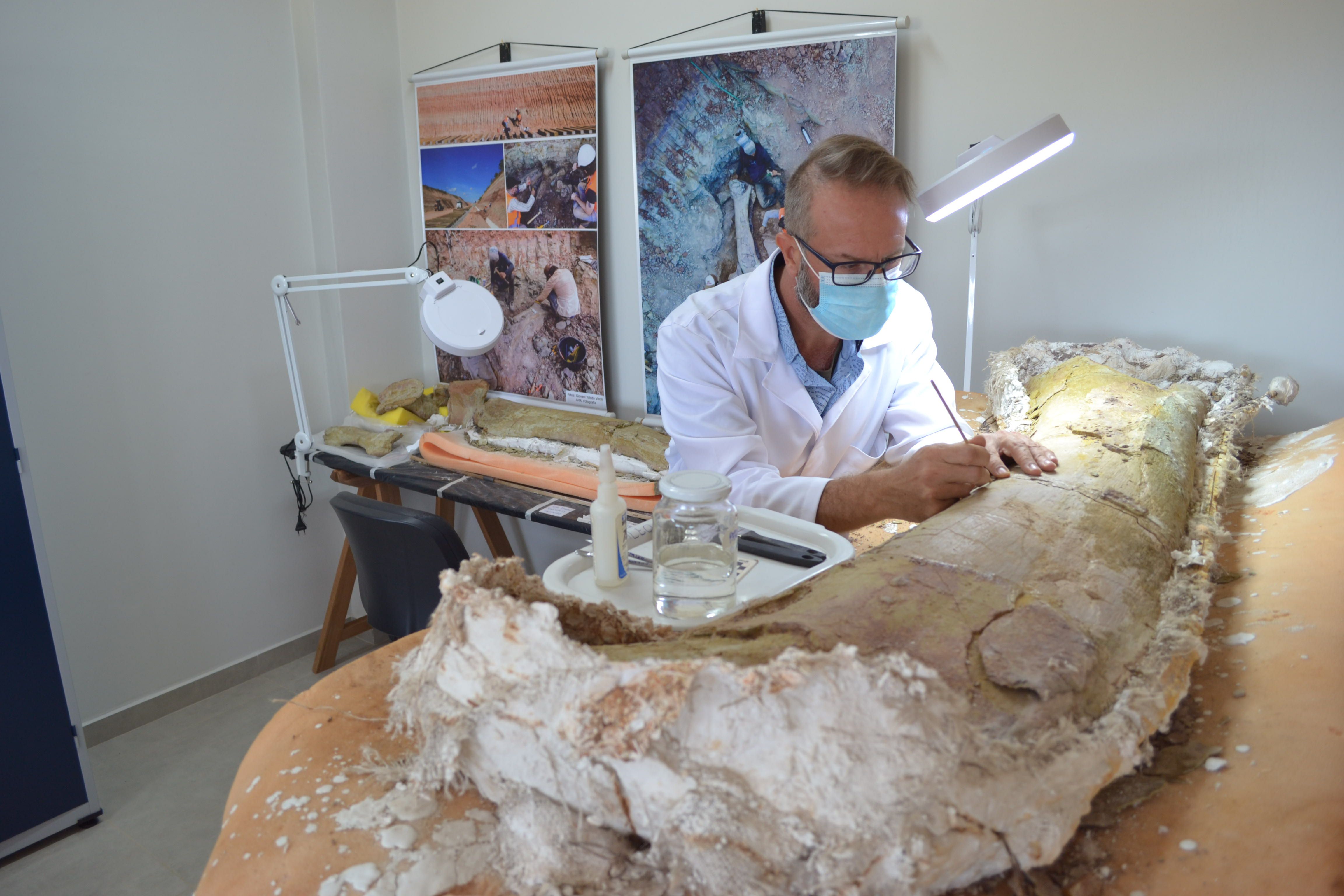
However, as to confirm that it was indeed a dinosaur—and which species—meticulous work was carried out to prepare the fossils and describe the species. “It’s a long preparation process, during which we reassemble the fragments and remove portions of rock that are attached to the fossils. It’s delicate, conscientious work, carried out in the lab, and it takes a long time. Once we are able to analyze the fossils directly, without the remaining rock attached, we organize the material by body parts—vertebrae, ribs, long bones—based also on the excavations, because we positioned them according to a sort of map of where each bone was found,” reports the researcher.
Kinship with dinosaurs from other continents
After a detailed analysis of the bones' morphology, it was possible to describe the species by comparing it with dinosaurs from a similar geological period. “The characteristics of Dasosaurus tocantinensis include those shared by sauropods [herbivorous dinosaurs], such as a long neck, a very long tail, and quadrupedal locomotion. The environment at the time was very hot. So, this dinosaur did not live in the Amazon rainforest as we know it today. The plants today are very different, as are the geography, the geomorphology, the rivers—all of that. Today it is much more humid and diverse,” he points out.
Based on the analysis of the animal's characteristics, the researchers concluded that Dasosaurus tocantinensis is related to a dinosaur found in Spain, Garumbatitan morellensis. The theory is that the latter species dispersed to North Africa and from there to South America around 130 million years ago, when there were still land connections between the continents, prior to the complete opening of the Atlantic Ocean.
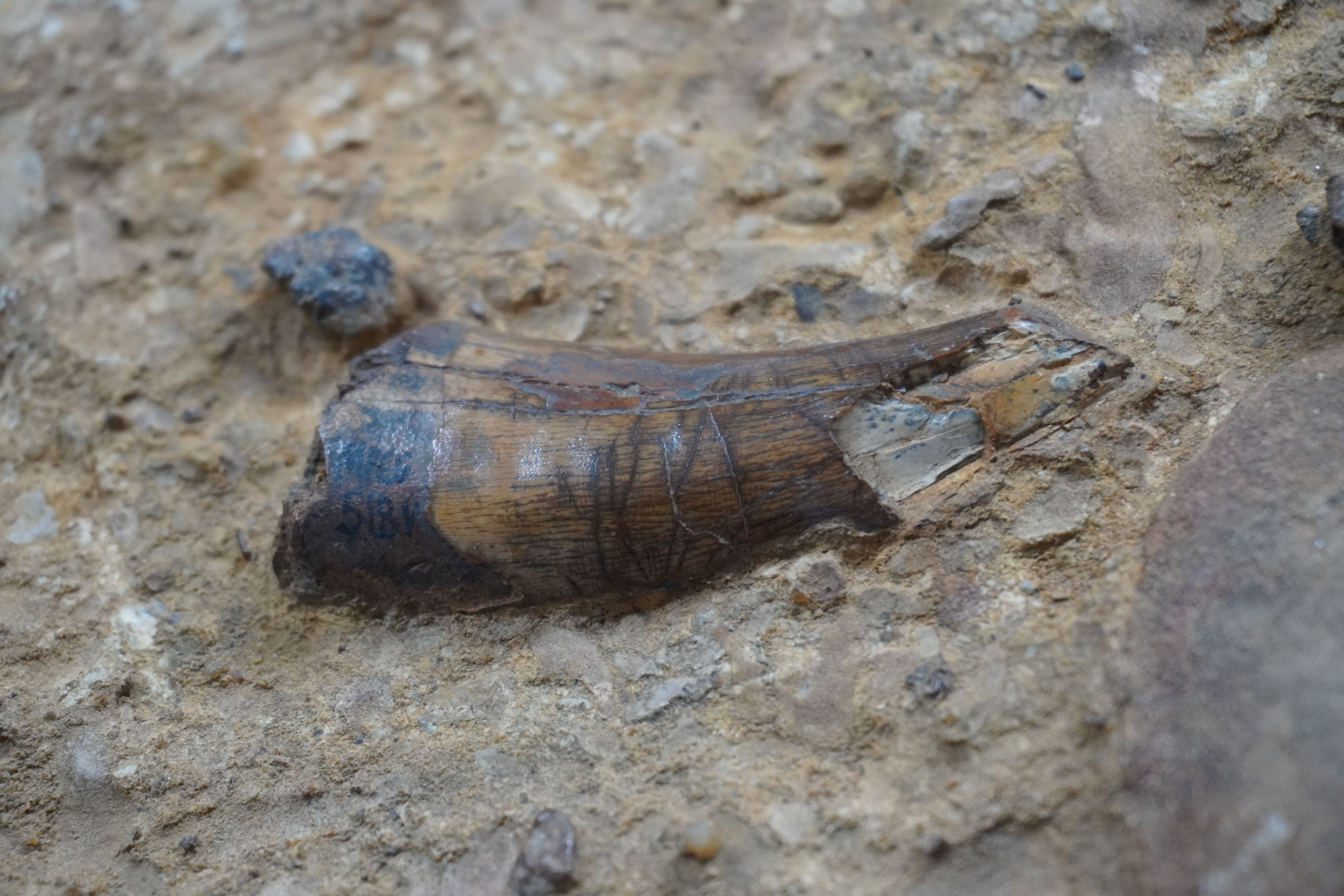
Another record of a dinosaur found in the Legal Amazon, but originating from another continent, belongs to the genus Carcharodontosaurus. The Alcântara Formation, a geological unit from the Cretaceous period located in the municipality of Alcântara, in Maranhão, has yielded fossils with teeth from this type of animal, which lived in Northwest Africa and likely also dispersed to South America.
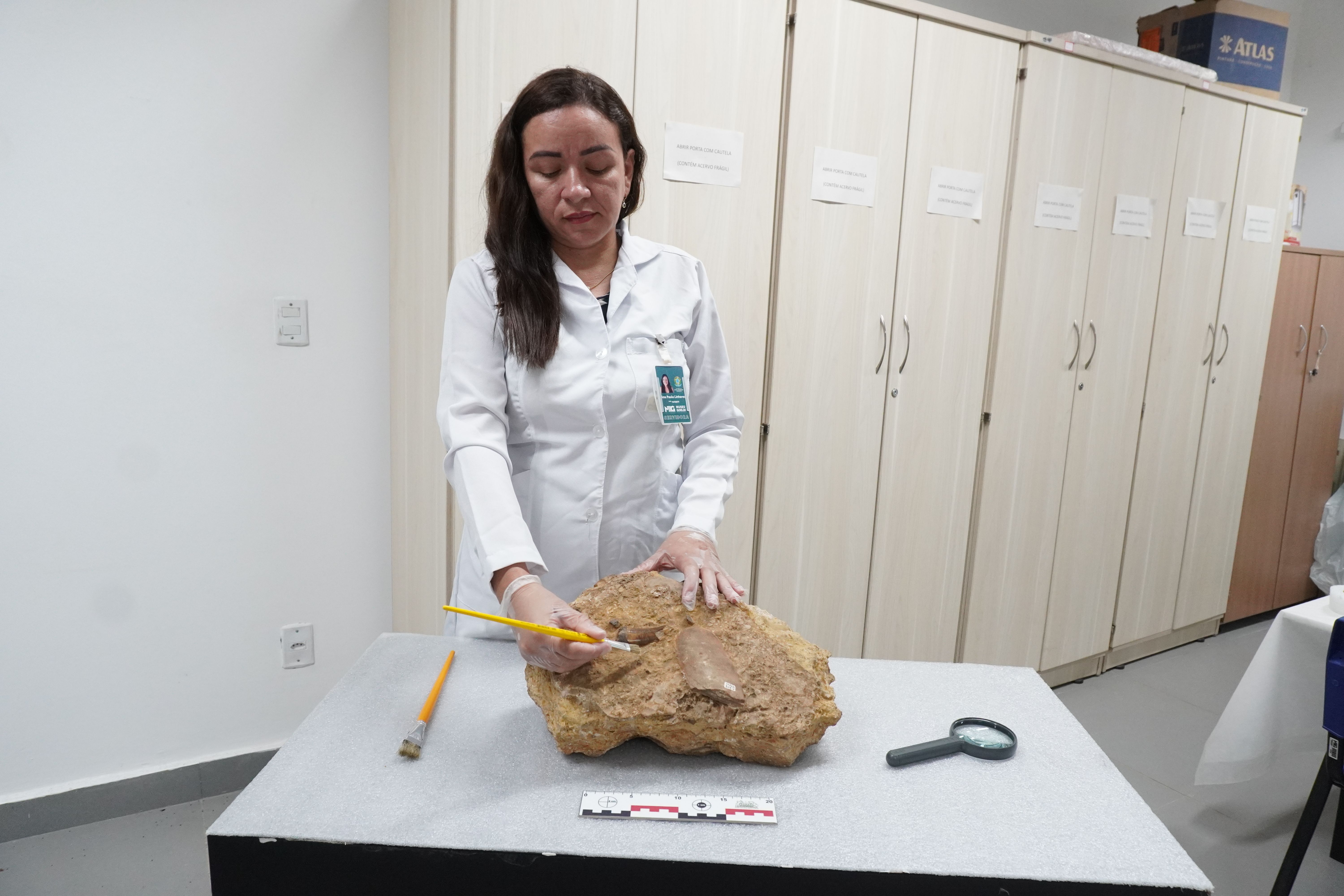
One of these fossils, with a carcharodontosaurus tooth, is housed in the paleontology collection of the Emílio Goeldi Museum of Pará (MPEG) in Belém. According to paleontologist Ana Paula Linhares, a researcher at MPEG, this genus is one of the representatives of the dinosaur fauna that existed during the Mesozoic Era, a time span ranging from approximately 252 million to 66 million years ago.
“Here in the Amazon, we have a tropical climate. But during that period, the climate was somewhat more arid or semi-arid. This record of carcharodontosaurus has great similarity to other specimens found on the African continent. This is an indication that the South American continent was connected to what is now the African continent, allowing these migrations,” explains the specialist.
Other species
In the territory of the Legal Amazon, at least three other species have already been recorded, in addition to those described above: Amazonsaurus maranhensis, a sauropod found in Maranhão, the first to be discovered in the Legal Amazon; Oxalaia quilombenses, also in Maranhão, whose name refers to the Orixá Oxalá and which is the largest carnivorous dinosaur ever discovered in the country; and Pycnonemosaurus nevesi, also carnivorous, found in Mato Grosso.
Compared to the rest of Brazil, which has more than 50 dinosaurs already cataloged, dinosaurs in the territory we now recognize as ‘Amazon’ are few. According to Mayer, the difficulty in finding fossils in the region is related to several factors.
“First, there is very dense vegetation cover, which prevents us from seeing fossil outcrops. In addition, there is the issue of the forest’s climatic evolution, which combines characteristics that prevent the materials from being preserved. There was a very complex hydrological dynamic, which did not favor the formation of these fossils over the course of geological evolution. That is why it is important for large construction projects to be monitored by paleontologists as well as archaeologists. If the archaeologist in Davinópolis had not noticed the fossils and called in the paleontologists, the material would have been destroyed by the rain or during the excavations,” he points out.
Ana Paula Linhares, from the Goeldi Museum, corroborates this explanation. “Our very rainy environment led to the degradation of the fossil exposures, when they occurred. This doesn't mean there was no fossil deposition, but over time, these deposits were exposed and eroded. There are also what is known as sedimentary basins, filled over time by various layers. They lie below the surface, making the fossils more difficult to find. It would require collecting samples by extracting material from beneath the ground,” the researcher explains.
“The record from the Amazon is smaller, but that doesn’t mean these animals hadn’t been there. On the contrary, the expectation is that there are actually more than what we’ve been able to document so far,” she adds.
Footprints
In addition to fossils containing dinosaur remains, a major discovery took place in the municipality of Bonfim, in Northern Roraima. More than ten footprints associated with the Jurassic–Cretaceous era were recorded. The discovery was made during a field study with Geology students led by Professor and geologist Vladimir de Souza, from the Federal University of Roraima.
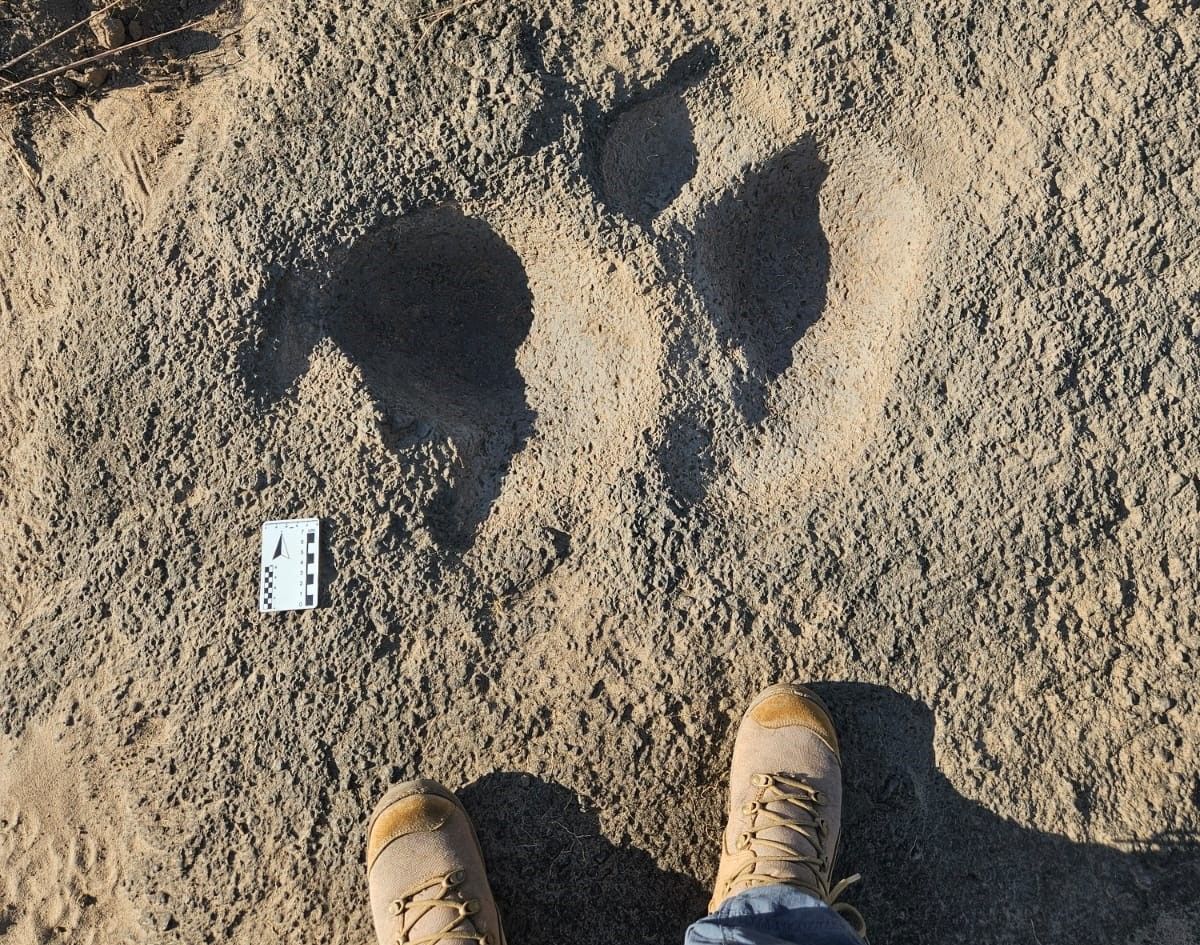
“While examining sandstone rocks on a rocky outcrop, we found numerous rounded and elliptical shapes that I suspected were footprints. This was confirmed when we found some with three toes. This left no doubt that they were dinosaur footprints, since the rocks date back to the Cretaceous period,” says Souza.
The studies to identify the dinosaurs, their genera, and their characteristics took more than ten years and were only published in 2025. According to the research, it is not possible to know with certainty which dinosaur species the footprints belonged to, but based on them, it is estimated which groups lived in the region, such as raptors, ornithopods, and thyreophores, which had armor on the dorsal and upper parts of their bodies, with horns or spines.
Although only six groups have been identified, the researchers believe that more than twenty lived there. “The large number of footprints and, in some cases, tracks stretching over 30 meters shows that the region had a great diversity of these creatures, which lived about 110 million years ago,” notes Souza.
New discoveries
Souza believes the Amazon region had a great diversity and abundance of dinosaurs. “But only 1% of the region’s area has been studied so far. There is a lack of funding and, especially, a shortage of paleontologists in the region who can be close to the research sites,” he ponders.
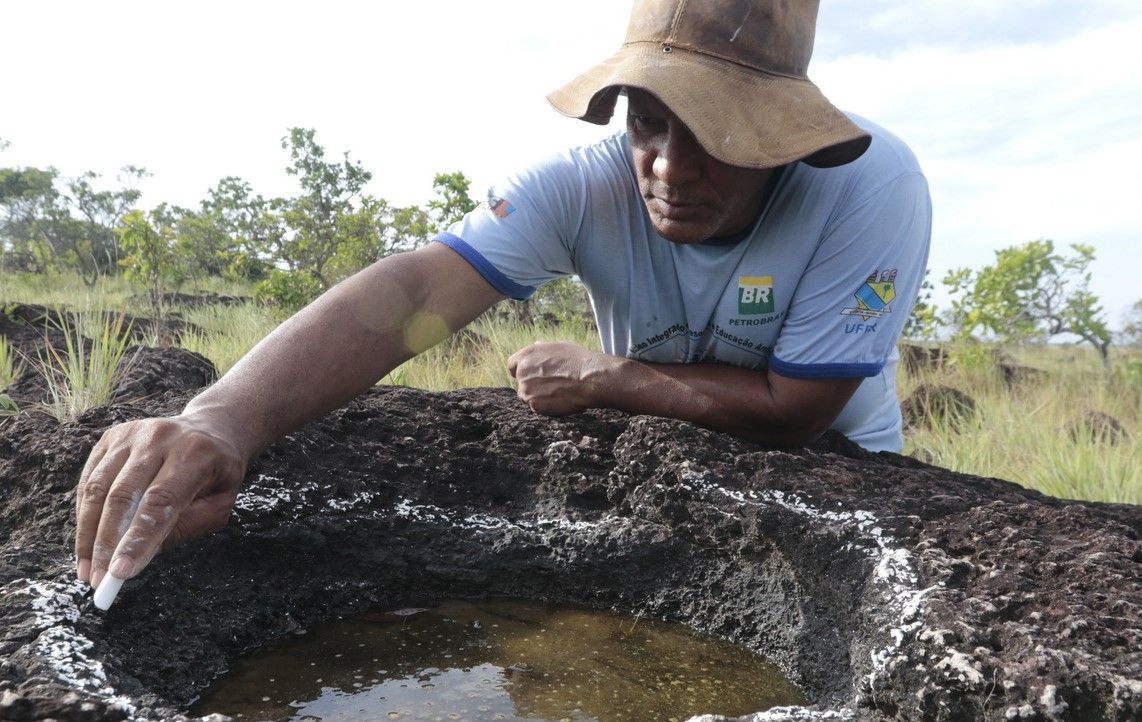
Ana Paula Linhares agrees with this statement. “We still need to explore much more. There are still too few paleontologists in the Amazon region compared to what studies request. We have several fossil-bearing sedimentary basins, many fossil sites of different ages, and not having enough specialized professionals limits new discoveries. That’s why we need funding, so that field expeditions can take place and help spark young people’s interest in geosciences or even paleontology, encouraging them to pursue new research. With all the knowledge that the Museu Goeldi has accumulated throughout its history, we hope to contribute to anyone interested in studying our past,” she concludes.
INSTITUTIONAL PARTNERSHIP
The production of Liberal Amazon is one of the initiatives of the Technical Cooperation Agreement between the Liberal Group and the Federal University of Pará. The articles involving research from UFPA are revised by professionals from the academy. The translation of the content is also provided by the agreement, through the research project ET-Multi: Translation Studies: multifaces and multisemiotics.