
“It’s very good, quality internet, it helps us, me and my family a great deal, whether for study or for work. The arrival of fiber optics here in Breves has improved our connection by 100% and brought many benefits to my daily life.” So says self-employed resident Andreia Pantoja, from the municipality in Marajó, who has benefited from the Norte Conectado [Connected North] Program, an initiative of the Ministry of Communications that brings internet one hundred times faster to Amazonian municipalities.
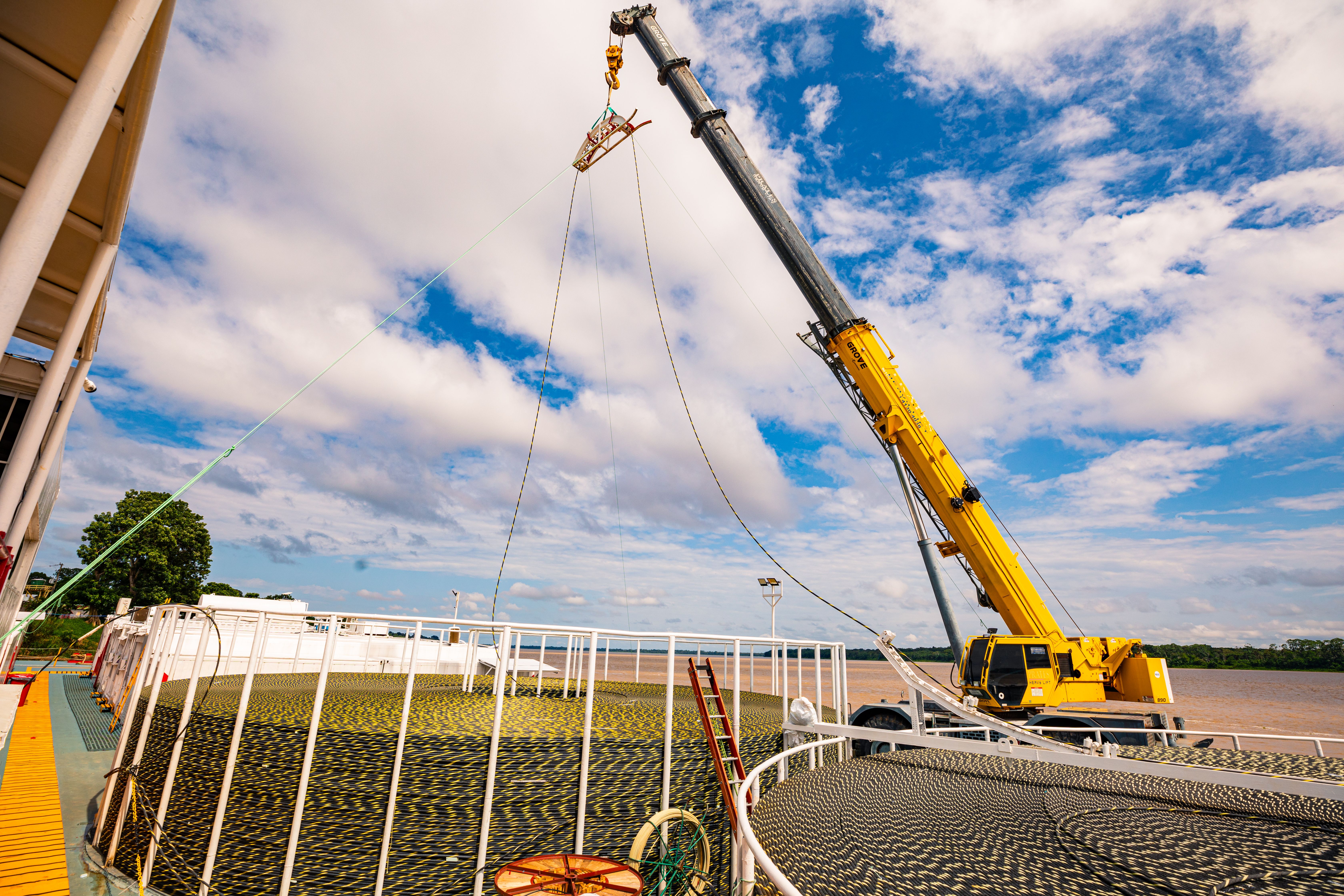
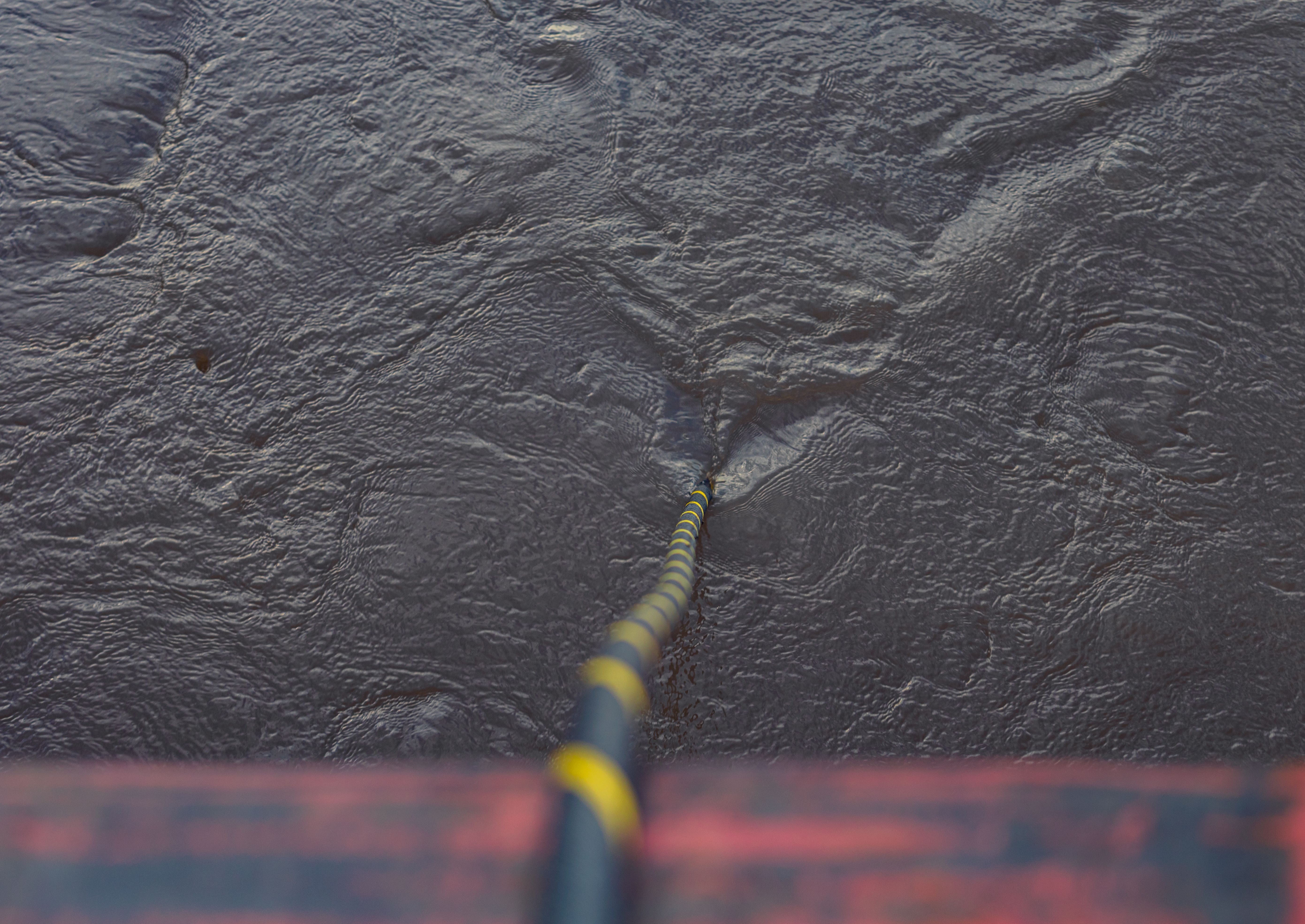
The program will install a total of 13,200 kilometers of fiber optics in the region’s rivers, creating the largest network of underwater digital infoways in the world and bringing connectivity to areas that have historically lacked quality internet.
It is expected to benefit 7.5 million Amazonians in around 70 municipalities across the states of Acre, Amapá, Amazonas, Pará, Rondônia, and Roraima. More than 300 public schools and more than 45 hospitals and health units will be served, as will city halls, public squares, judicial bodies, security agencies, and the Armed Forces.
CITIZENSHIP
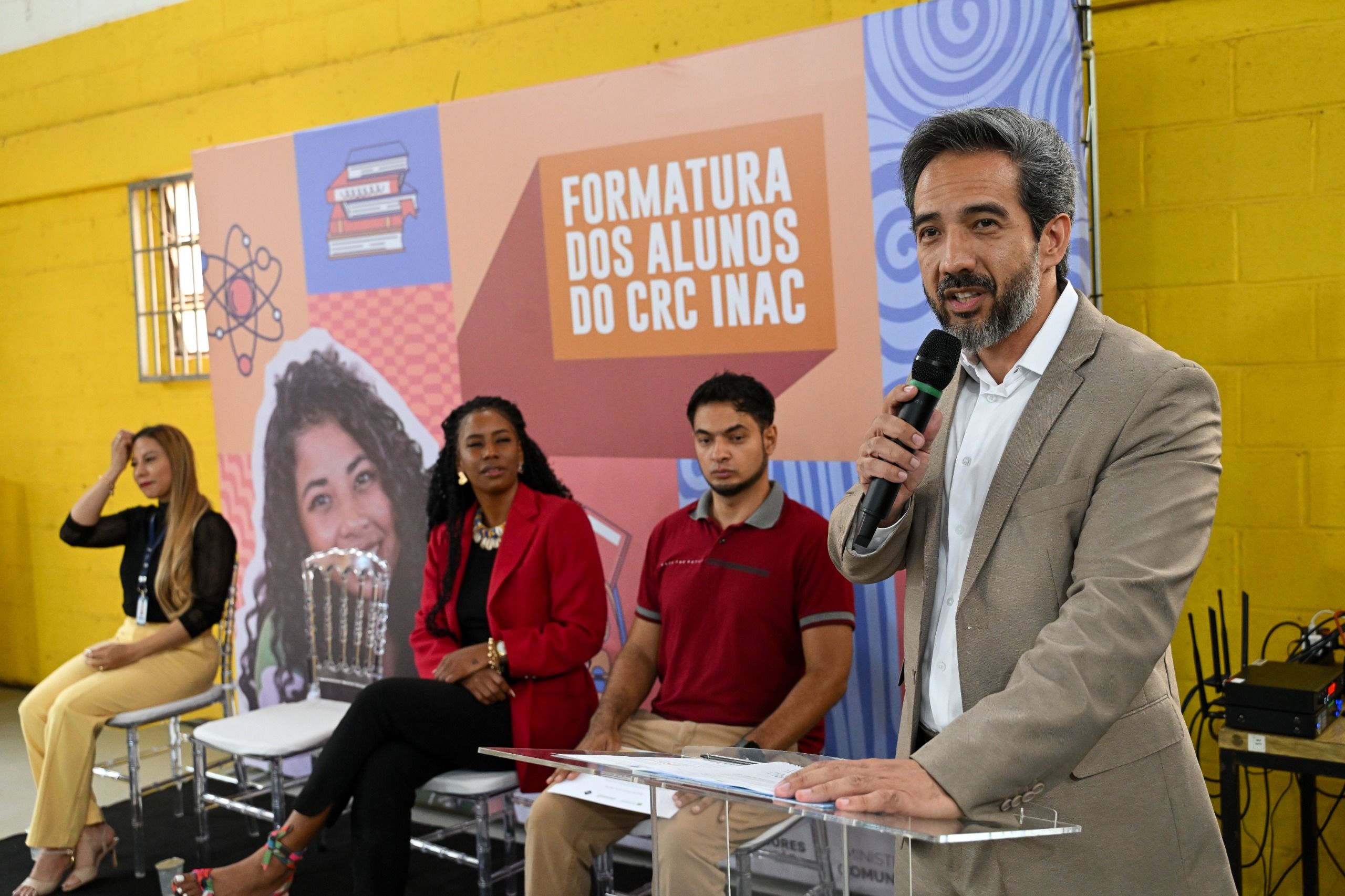
According to Eduardo Takafashi, director of the Departamento de Projetos de Infraestrutura e de Inclusão Digital [Department of Infrastructure Projects and Digital Inclusion] at the Ministry of Communications, the program aims to expand telecommunications infrastructure in the Amazon and thereby support the full exercise of citizenship.
“When we talk about citizenship, we necessarily have to talk about connectivity. This infrastructure supports education and health, drives development, and helps reduce social inequalities. So for the exercise of citizenship, it is no longer enough to provide electricity, water, and sewage: we also need the internet,” says the specialist.
For Takafashi, quality internet brings countless opportunities to a region where such services have long been precarious, with unstable, low-speed connections. The Norte Conectado infoways have allowed providers to offer 1 Gbps connections where speeds were previously just 10 Mbps.
“The first scenario we can think of is education. Teachers and students can access digital content, and distance learning becomes possible. It opens the door for students to reach that world. There are endless possibilities for study and learning. When it comes to health, however, we create the conditions for telemedicine, with support from specialists who are farther away and could not travel to the locality. Reducing that travel could even save lives. And for economy, a stable connection makes sales easier. In some of the places we have visited, the most frequently cited example is the use of Pix payments, which was not possible before,” the director reports.
Connectivity promotes education and work
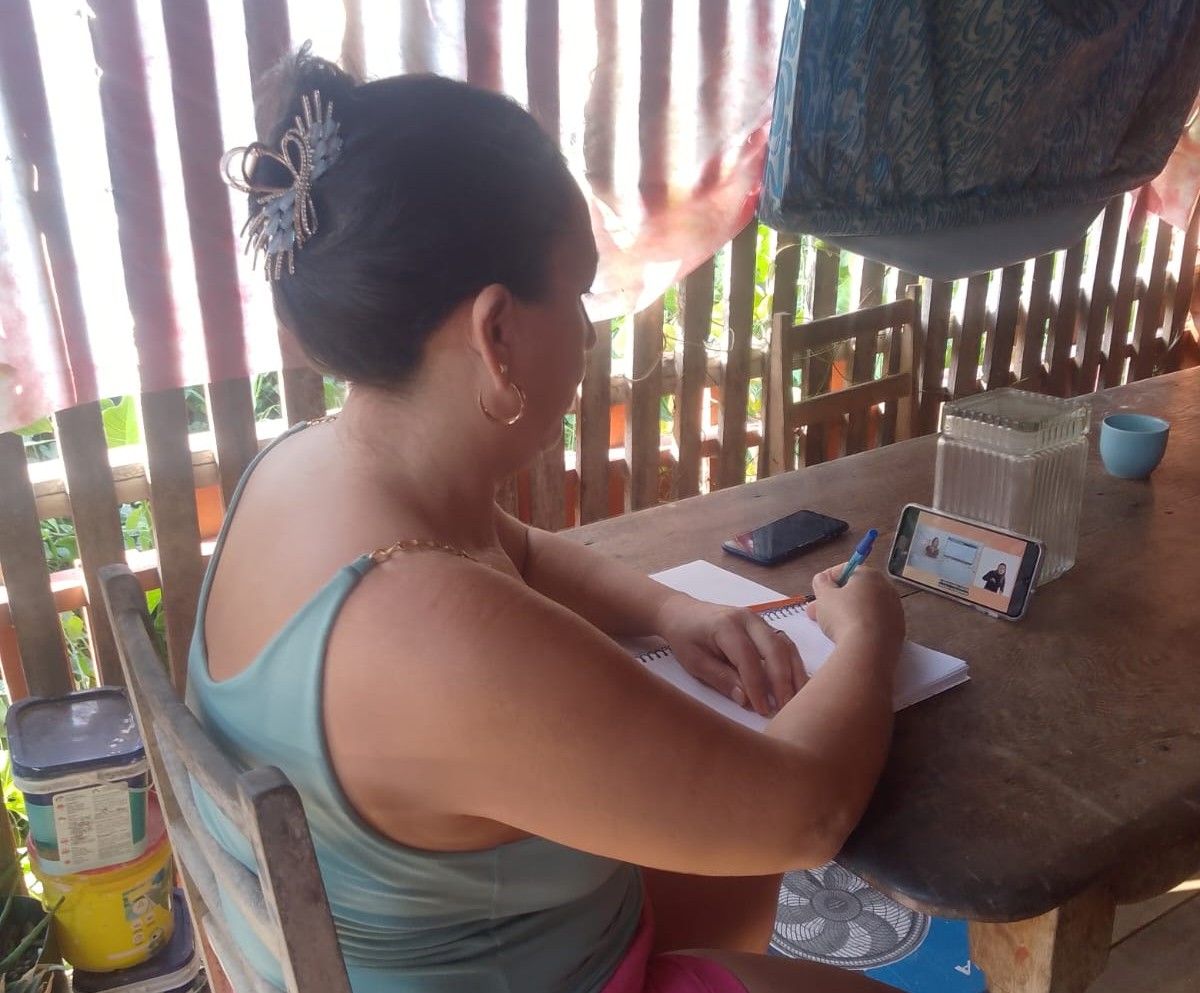
Andreia Pantoja, from Breves, offers clear examples of the better opportunities that a quality connection provides. “I was already studying Pedagogy in a blended-learning program. But before, the internet was very slow, it fluctuated, and it dropped a lot, really a lot. Now, with fiber optics, the connection has improved enormously. I do my coursework and exams, I watch a lot of video lessons and videos in general to keep myself informed. I also make video calls with friends without the call dropping,” the resident says.
The stability of the connection has also helped income generation. “I sell lingerie for a distributor. I have an app on my phone and I do everything there: the sales, and I share the images with customers. Having good internet helps a lot with that. And my children can also study and play. My daughter, for example, is studying for the Enem [the national high school exam]. At home there are me, my partner, and my six children, sometimes all using the internet at the same time, and we have no problems with the connection freezing or dropping,” she says.
Rollout began in 2014
The program began in 2014, initially with networks deployed by the Brazilian Army through what was then called the Programa Amazônia Conectada (PAC) [Connected Amazon Program]. The Army built two infoways in Amazonas: one linking Manaus to Tefé, including the municipalities in between, and another connecting Manaus to São Gabriel da Cachoeira and intermediate towns. In a second phase, carried out by the Rede Nacional de Ensino e Pesquisa (RNP) [National Education and Research Network] through the Sustainable Programa Amazônia Integrada Sustentável (PAIS) [Integrated Amazon Program], Infoway 00 was built, running from Macapá, in Amapá, to Alenquer, in Pará, passing through Santarém. Infoway 01, built by the Performance Assessment Entity/Seja Digital (EAD), connected Santarém to Manaus.
From 2022, deployment was taken over by the Entidade Administradora da Faixa de 3,5 GHz (EAF) [3.5 GHz Band Administrating Entity] a private entity formed by the operators Claro, TIM, and Vivo to fulfill the obligations set out in the 5G auction notice. The consortium became responsible for building Infoways 02 through 08, as well as revitalizing the original PAC networks.
Infoway 02, which connects Manaus to Atalaia do Norte (AM), on the border with Peru, had its infrastructure completed in 2025, including both river and land cables. Infoway 03, between Belém and Macapá, in Amapá, was inaugurated in June of this year, serving municipalities on Marajó Island, such as Breves. Infoway 04, which links Manaus to Boa Vista, in Roraima, was cleared for operation in July 2026. Infoway 05, on the Madeira River between Manicoré (AM) and Porto Velho (RO), is still under construction. Infoways 06 and 08, which would link Amazonas and Acre, are still being studied. Infoway 07 corresponds to one of those built by the Army, as far as São Gabriel da Cachoeira.
Model serves public and private sectors
Each infoway has 24 pairs of optical fiber. Six pairs are reserved exclusively for the public sector, such as schools, hospitals, and other agencies. Another six pairs are kept as a technical reserve. The remaining twelve pairs are made available for use by the private sector.
“The model adopted by the program combines a portion dedicated to public service and another portion for commercial use of the infrastructure. The companies that will use it are selected through a public call. Those chosen form what is called the Neutral Operator Consortium, which may commercially exploit the infrastructure but will also be responsible for maintaining it. So, all recovery and operation work is done by these consortia,” explains Takafashi.
The director clarifies the roles played by each institution. “The Ministry coordinates public policy, working to build infrastructure in a region where companies would have no economic interest in investing. The ones carrying out the work, laying the cables on the riverbeds, is the EAF, with funds from the 5G auction. And the Agência Nacional de Telecomunicações (Anatel) [National Telecommunications Agency] chairs the Grupo de Acompanhamento da Implantação das Soluções para os Problemas de Interferência (Gaispi) [the Group for Monitoring the Implementation of Solutions to Interference Problems] in the 3,625 to 3,700 MHz band), which was created to oversee the execution of these commitments,” the specialist lists.
River route preserves 68 million trees
According to Eduardo Takafashi, the infrastructure rollout takes advantage of the region’s abundance of rivers. “We take advantage of precisely this characteristic by installing the cables on the riverbeds. And this also represents environmental care, because without the rivers, the way to open a path to these localities would be over land, using poles, and only where it was possible to reach,” he notes.
The director stresses that this process would involve cutting down many trees. “Our estimate is that by using the river route, we preserve around 68 million trees. So we combine all these benefits for the population, bringing people to the full exercise of citizenship, while caring for the region’s characteristics and reducing the impact on the forest. We believe this project truly changes people’s lives.”
INSTITUTIONAL PARTNERSHIP
The production of Liberal Amazon is one of the initiatives of the Technical Cooperation Agreement between the Liberal Group and the Federal University of Pará. The articles involving research from UFPA are revised by professionals from the academy. The translation of the content is also provided by the agreement, through the research project ET-Multi: Translation Studies: multifaces and multisemiotics.


