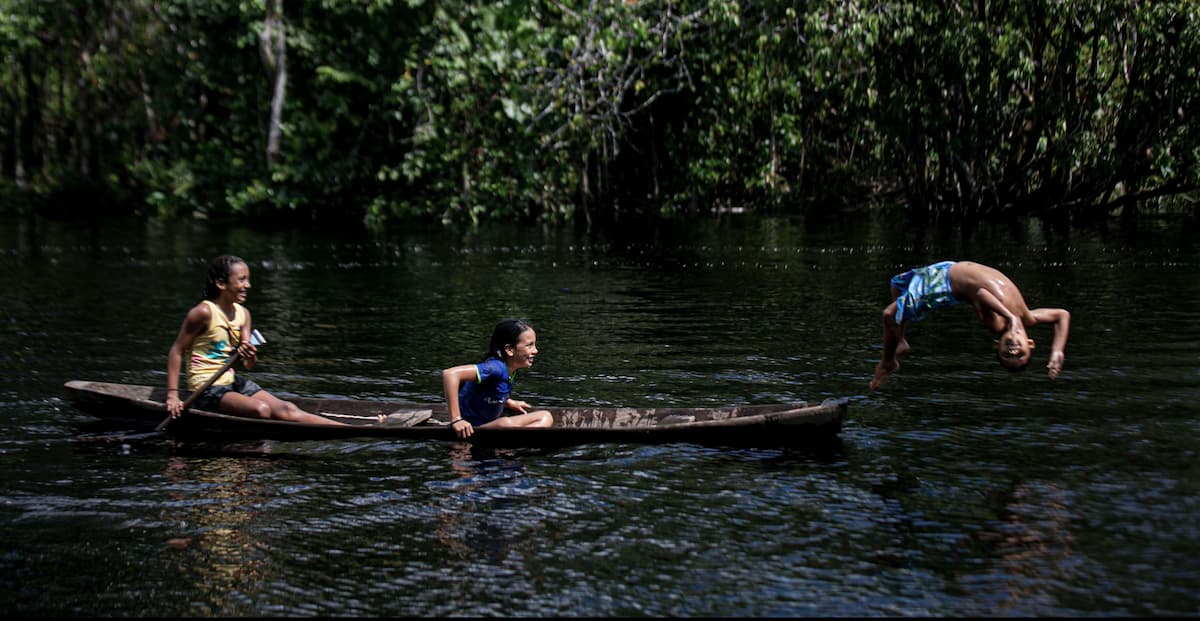
“Esse rio é minha rua. Minha e tua, mururé” [This river is my street. Mine and yours, mururé]. The lyrics by Ruy Barata and Paulo André Barata, composers from Pará state, part of a locally well-known carimbó song, portray the Amazon daily life, where rivers serve as transportation routes. In some areas of the region, it is the only existing one. In these areas, access is only available via rivers and streams.
However, similar to other types of transportation, boats are “villains” for the environment since, in general, they use fossil fuels, such as diesel, gasoline, and other petroleum derivatives. In addition, river transport, in particular, also brings the risk of oil spills into water bodies.
Thus, some initiatives in the region aim to change this reality, contributing to the energy transition of Amazon river transport. Pará already has at least three boats powered by electricity, and new models are under development. In addition, it recently received a vessel powered by green hydrogen. In Amazonas, riverside people are testing electric outboard motors - popularly known as "rabetas" - developed by a large company and a startup.
Itaipu Parquetec, a technology and innovation park linked to the Itaipu Binacional hydroelectric plant, has been researching green hydrogen fuel for about 15 years and has managed to use this technology in boats. One of them was delivered to Belém during the United Nations Climate Change Conference (COP 30). The timing chosen for the launch of the initiative was strategic: precisely during the Conference that discusses how to reduce emissions of gases that cause global warming, Itaipu Parquetec presented a means of transport that has only water as a byproduct. Called Boto H2, the boat has a propulsion system that combines green hydrogen, solar energy panels installed on the roof and an integrated battery pack.
According to Guilherme Nabeyama, an electrical engineer at the Itaipu Parquetec Hydrogen Technology Center, the boat was entirely designed for the reality of the region. “We talked to people here to understand the necessary requirements. Then, we converted the engine to electric and then to the hydrogen part. Our system was designed to work with three sources: solar, hydrogen, and a battery for emergencies, always prioritizing solar energy, which is more abundant. Then, green hydrogen comes in as a second source of energy for propulsion,” he explains.
The expert clarifies how green hydrogen technology works. “We use a hydrogen fuel cell. It takes hydrogen and oxygen molecules from the atmosphere and joins them through a membrane. In this chemical reaction, electrical energy and water are released. The energy is then directed to propel the engine. And the byproduct of, let's say, the exhaust, is just water. Therefore, it is a clean energy source with an efficiency of 60%, much higher than a combustion engine,” the engineer details.

Boat powered by green hydrogen fuel will collect waste
The Boto H2 was donated to Belém and will be under the responsibility of the Fundação de Amparo e Desenvolvimento da Pesquisa da Universidade Federal do Pará (Fadesp/UFPA) [Foundation for Support and Development of Research at the Federal University of Pará]. According to environmental engineer Newmar Wegner, manager of the Center for Intelligence and Territorial Management at Itaipu Parquetec, the vessel will function as an extension of a park project that collects recyclable materials in Paraná and Mato Grosso.
“We already have this program well established and we brought the methodology to Belém. However, in other states, everything is done on land. Here, we needed another tool, because of the islands, to transship the waste. But this had to be accompanied by the idea of decarbonization. Because it is useless to recover recyclables using fossil fuels. The proposal was to do the process from start to finish. And the launch during COP 30 was a symbol of that,” says Wegner.
Initially, the Boto H2 will be fueled by a stock of green hydrogen brought by Itaipu Parquetec, but a partnership between the park and UFPA is already working on the development of a plant to produce hydrogen and also a refueling station, which should operate at the university.
Electric motors are adapted to the region's conditions
It is also at UFPA that research is being conducted for the production of electric motors for vessels, adapted to the navigation conditions of the region. A partnership between the university and Norte Energia, which operates the Belo Monte Hydroelectric Plant, has already produced three boats with electric propulsion and is working on new prototypes.
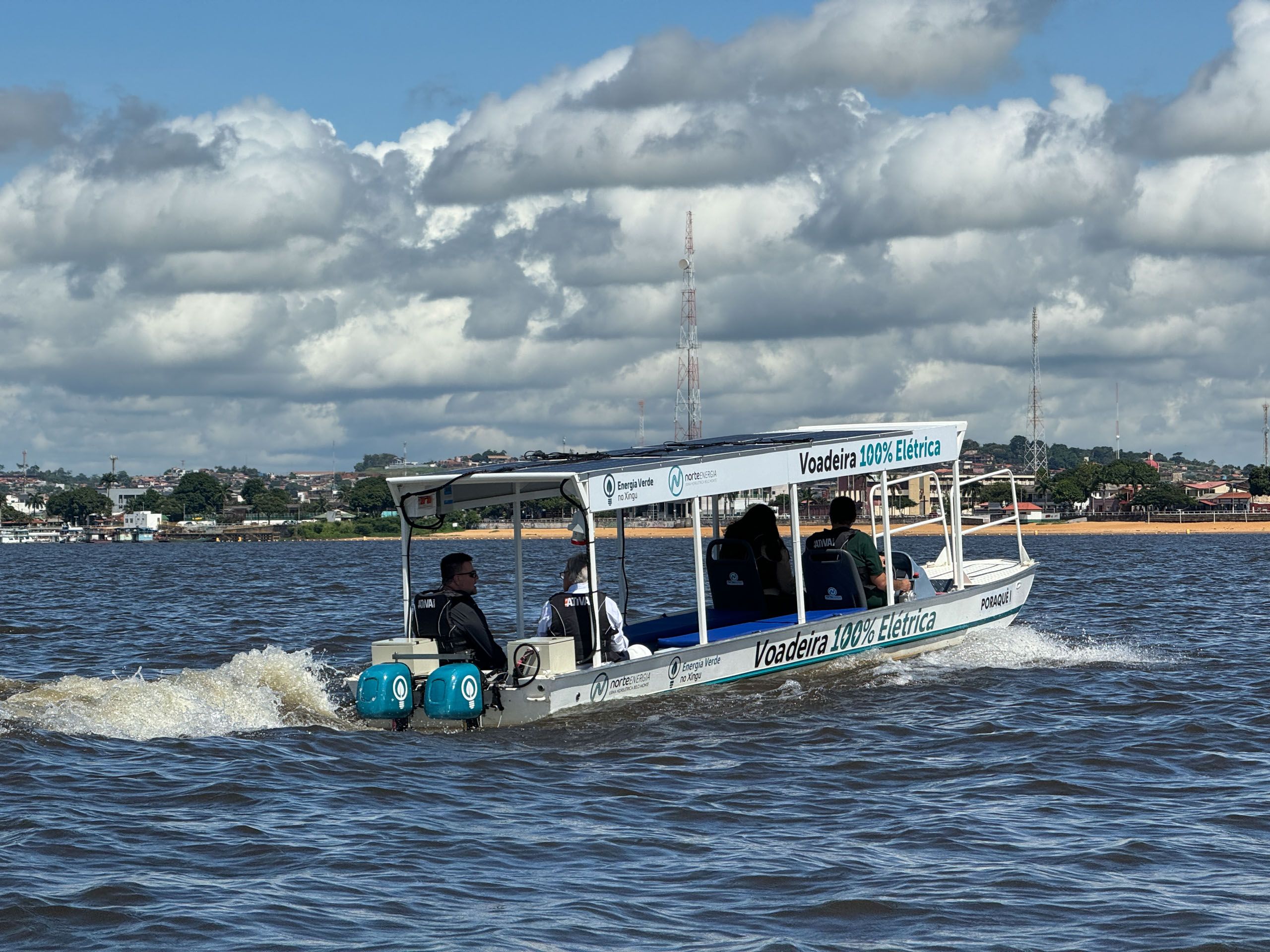
Responsible for the initiative, Professor Emannuel Loureiro from the Faculty of Naval Engineering explains that the research aims to improve river mobility in the Amazon. “We already have the first three projects developed. One of them is a fully electric ferry boat, called Poraquê. With the inauguration of new piers at UFPA, it will soon be in operation and will serve to transport the academic community from one point to another, just like the circular buses do,” he adds.
The other prototypes developed were two electric motorboats, used on the hydroelectric dam lake on the Xingu River in Altamira, for the plant's own operations. The use of these boats, instead of traditional ones, represents approximately 1,400 liters less of fossil fuels per month.
According to the professor, the impact of the technology on society is enormous. “In addition to the environmental aspect, there is the economic and social side. The operating cost of these vessels is very low. In riverside communities, a liter of diesel oil can cost more than R$ 10.00 Reais. With the electric vessel, charged by solar energy, the cost is practically zero. Government actions and partnerships with private entities can promote the donation of these motors, freeing people from dependence on fossil fuels,” he states.
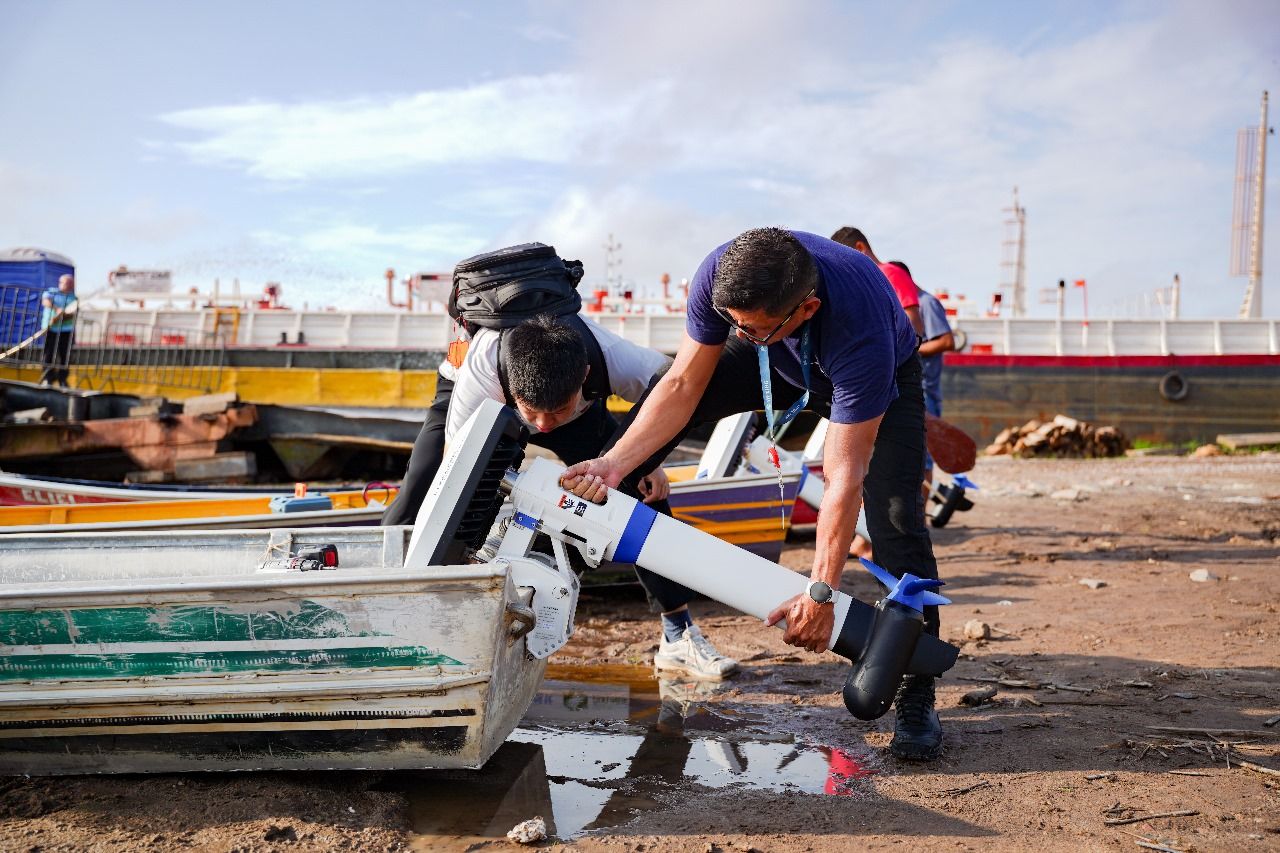
The third project of the partnership between UFPA and Norte Energia was named Enguia and aims to develop an electric propulsion system for small vessels, that is, the outboard motors used by riverside people. “We are building prototypes and verifying their practical application. The electric boats that already exist, used in Europe, which navigate short distances on rivers with little currents, are not suitable for our region. So, we are testing whether the technologies apply to the particularities of the Amazon and also ways to reduce the cost of production and enhance the use of this technology on a large scale,” Loureiro points out.
Riverside people test electric outboard motors
Another initiative, which also aims to produce electric motors for boats on a large scale, properly adapted to the region's conditions, is from Livoltek, a Chinese manufacturer of renewable energy equipment, whose Brazilian factory is located in the Manaus Free Trade Zone, in Amazonas.
The technology of electric motors for boats is part of the company's global portfolio, but it has undergone several adaptations to suit the Amazon River environment. All this with the help of those who know this reality best: the riverside people.
According to Flávio Pimenta, Director of Mobility for Latin America at Livoltek, the adaptations were many. “We redesigned the attachment points, support, shaft, and propeller to ensure the same type of usability that the riverside people are already used to. And that was an essential point of the project. We didn't develop the solution from inside an office: we took it to the communities, listened to the users, and made adjustments based on their reality. The tests in Careiro da Várzea [municipality in the Metropolitan Region of Manaus], for example, will give us valuable information about autonomy, recharging, and the behavior of the motors in daily use,” he explains.
Fisherman Wilmar Silva, from the São Francisco community in Careiro da Várzea, was one of those who tested the new product. “The motor is silent and the cost is zero. It has good power, good reverse. It contributes to the environment because it doesn't produce smoke, noise, or consume oil. I thought it was good,” he reported. His only concern was the battery life, since boat trips in the region can last half a day or even a whole day.
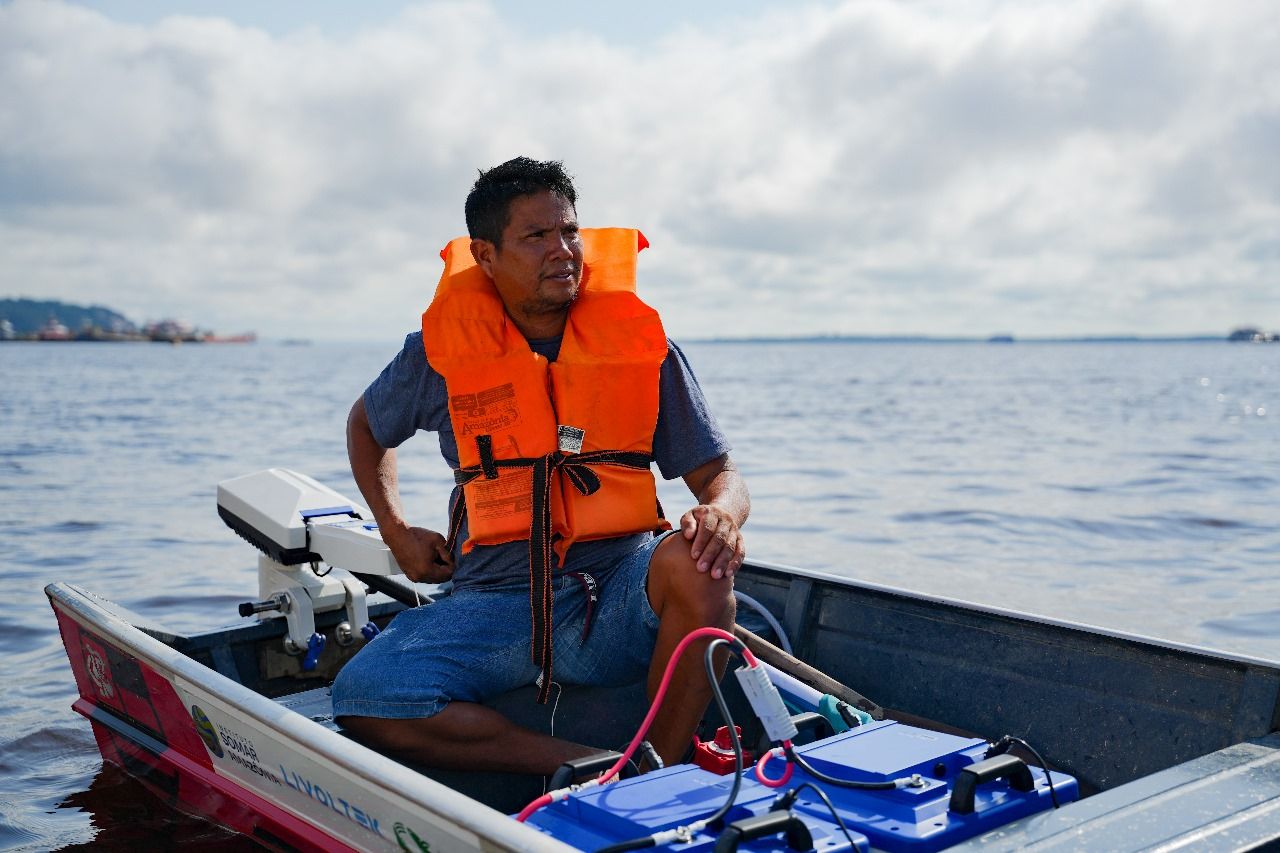
For Pimenta, the benefits of electric motors in river navigation are numerous. “The Amazon region is heavily dependent on river transport, which means high consumption of combustion engines, with high costs and significant environmental impact. Electric motors have zero greenhouse gas emissions and virtually eliminate the risk of fuel spills. For riverside people, the first benefit is savings on fuel and maintenance. Then comes comfort: less noise and less vibration. Of course, the initial investment is higher, but the total cost over time will be lower than that of a traditional outboard motorboat,” the director points out. The expectation is that the production line will soon be implemented in Manaus, starting with the models used in the pilot projects.
Startup invests in rabetas in the region
The startup E-UBÁ Amazônia is also investing in the manufacture of electric outboard motors [rabetas]. The company was founded by the Polish man Zbigniew Kozak, who arrived in the Amazon in 2016 and experienced firsthand the demands of the region and how technology can help solve them.
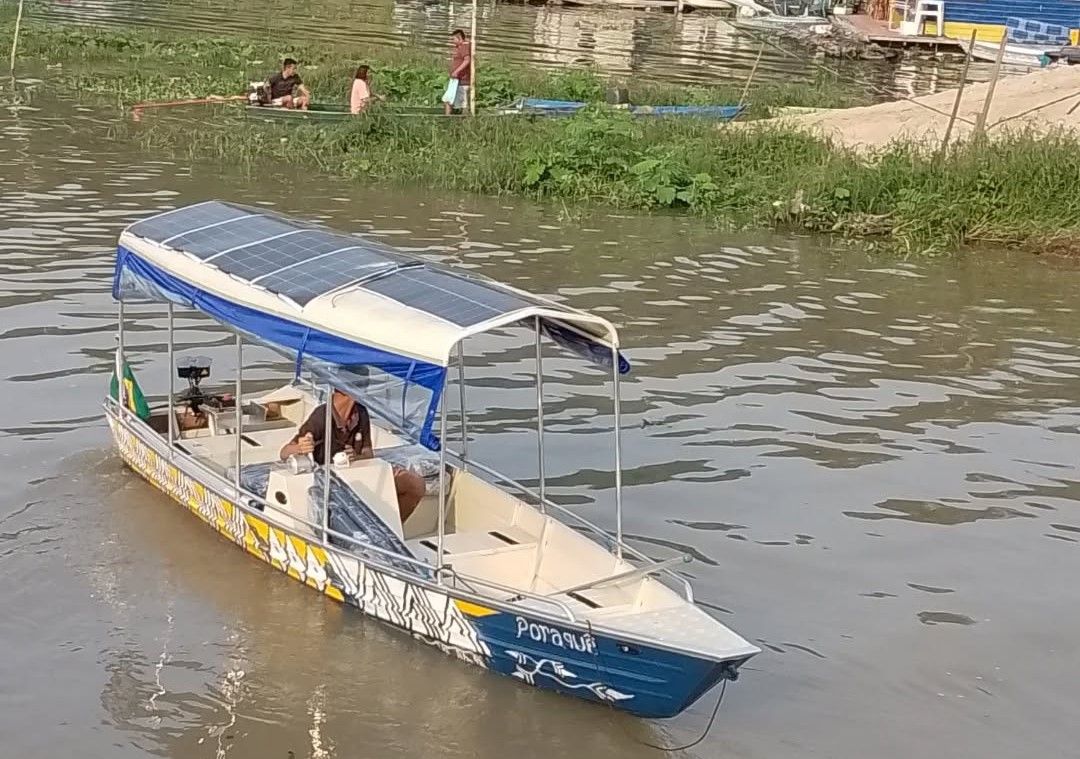
Considering the impacts of conventional outboard motors, he designed two small electric boats, using public and private funding. “These are two electric boats that use photovoltaic panels on the roof, which never need recharging, and have been tested by riverside communities. They are used practically daily. We receive feedback and improve the prototype. It is an open model, so that it can be replicated in the Amazon, focusing on protected areas. The intention is to take this solution where it will have the greatest positive impact, both on the economy and on the lives of the people who live in the forest, as well as on the preservation of this forest,” emphasizes Kozak.
In addition to the two electric outboard motors, E-UBÁ also has a charging station, where the startup's floating office operates. "Some boats don't have roofs, so there's no way to install solar panels. So, they can recharge their energy at our station."
Now, Kozak is looking for support to start production. "I'm looking for partners to get the equipment and supplies and assemble on a large scale, manufacturing from one hundred to one thousand units of this electric propulsion system per month. The demand is high because there are more than a million small boats circulating in the Amazon, and it's a technology that can change the lives of many riverside people," he says.
Researchers evaluate the potential of decarbonizing river transport
For Professor Emannuel Loureiro, electric vessels have enormous potential in the process of decarbonizing river transport fleets. “Our region depends heavily on this transport. For many local people, it is a means of subsistence. Developing technologies that contribute to the preservation of the environment and people's lives is fundamental,” he says.
According to Guilherme Nabeyama, green hydrogen is an excellent option for the energy transition in the region. “For the production of hydrogen, we need water and sun, using solar energy to produce the fuel. These two elements are abundant in the region,” he recalls. “The issue now is to continue the studies, to be able to increase the scale of production and reduce the price,” he adds.
Flávio Pimenta states that the energy transition is already happening in the Amazon, but that it needs to respect the local reality. “The path begins with pilot projects like the ones we are conducting and then progresses to large-scale adoption. What we are seeing is a growing movement of interest, mainly because the technology is not only more sustainable but also economically advantageous. We believe that the electrification of river transport will be one of the most important transformations in the Amazon, guaranteeing a better life for the community,” the director predicts.
INSTITUTIONAL PARTNERSHIP
The production of Liberal Amazon is one of the initiatives of the Technical Cooperation Agreement between the Liberal Group and the Federal University of Pará. The articles involving research from UFPA are revised by professionals from the academy. The translation of the content is also provided by the agreement, through the research project ET-Multi: Translation Studies: multifaces and multisemiotics.