“Vá para o raio que o parta!” [“Go to hell!”] is an expression that conveys anger and outrage, used when one wants to send someone “far away.” However, in Pará and especially in Belém, it may mean something quite different: a form of cultural heritage.
It is an architectural style that emerged in Belém between the 1940s and 1960s, associated with modernism, a movement widely adopted in the architecture of the period. Raio que o Parta sought to incorporate modernist elements into local constructions, adapting them to regional realities and enabling their assimilation by more popular social strata.
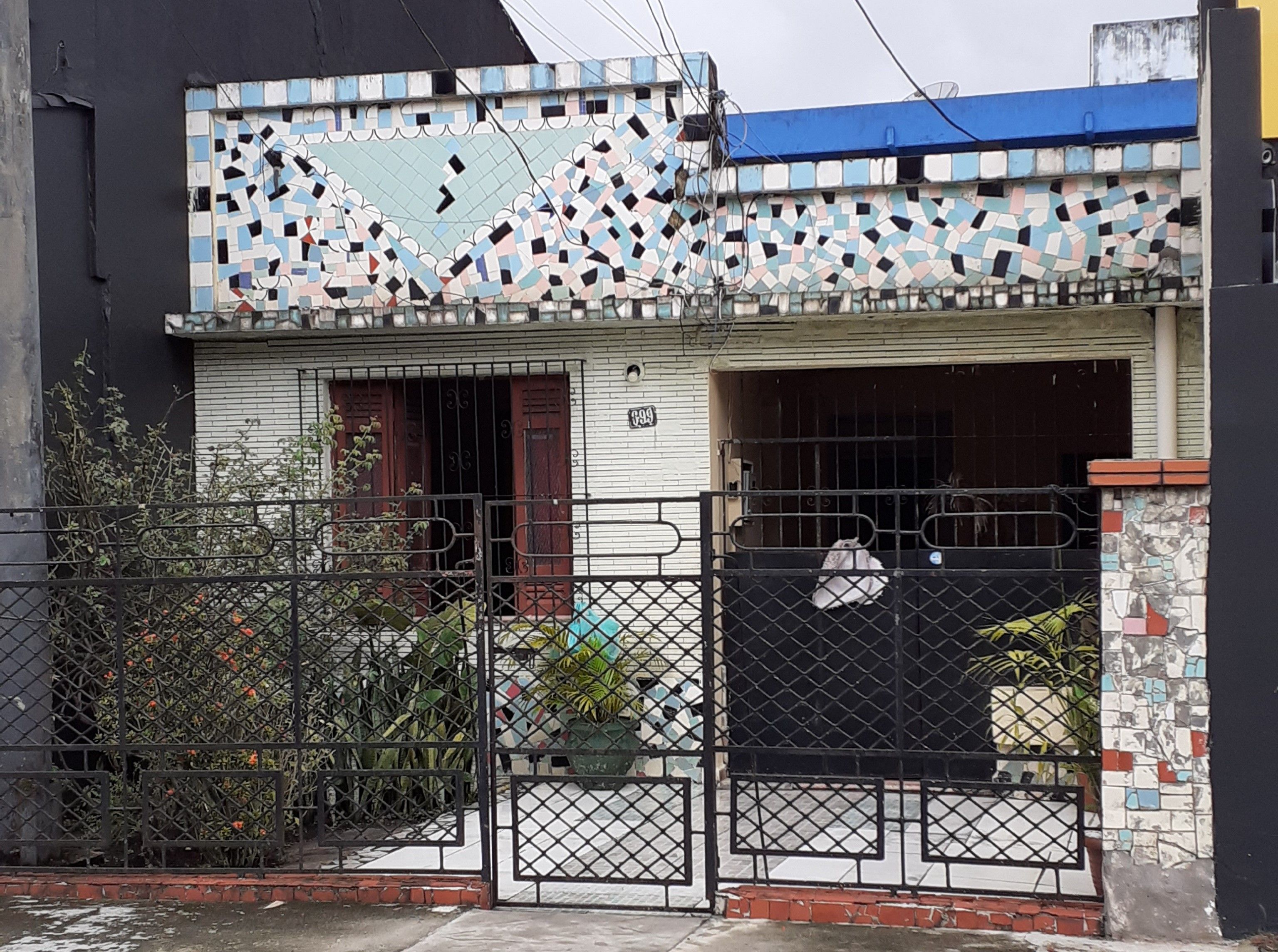
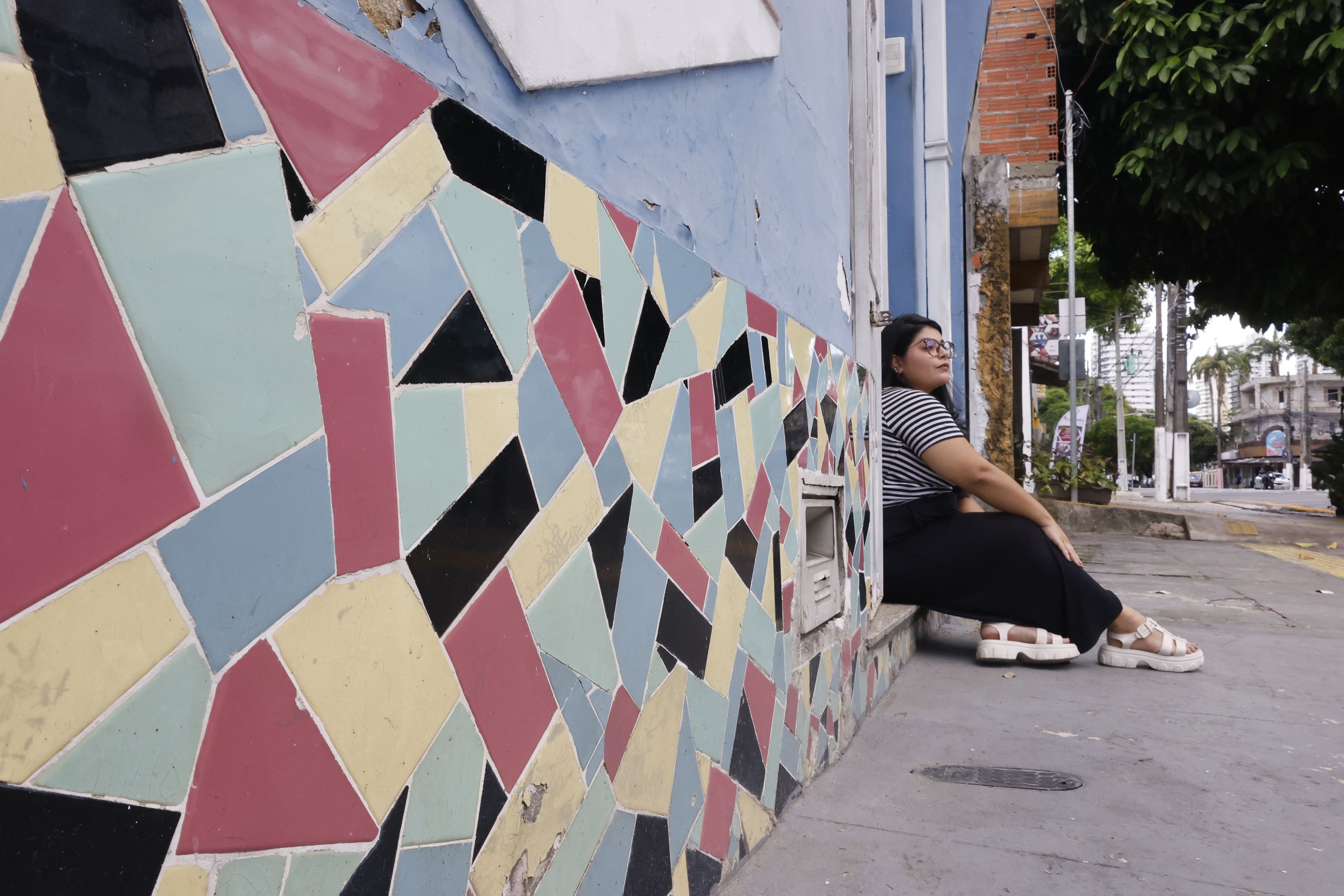
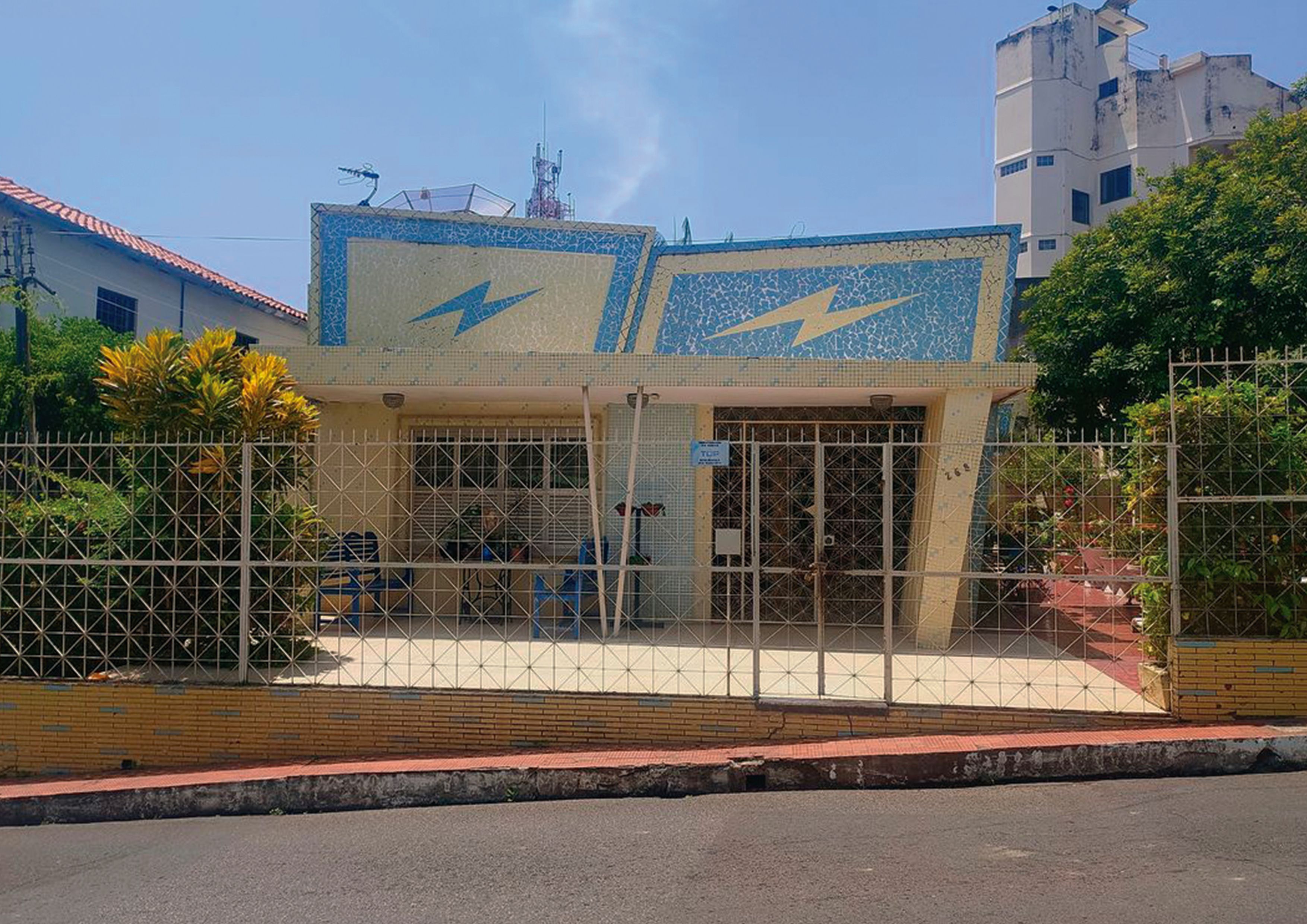
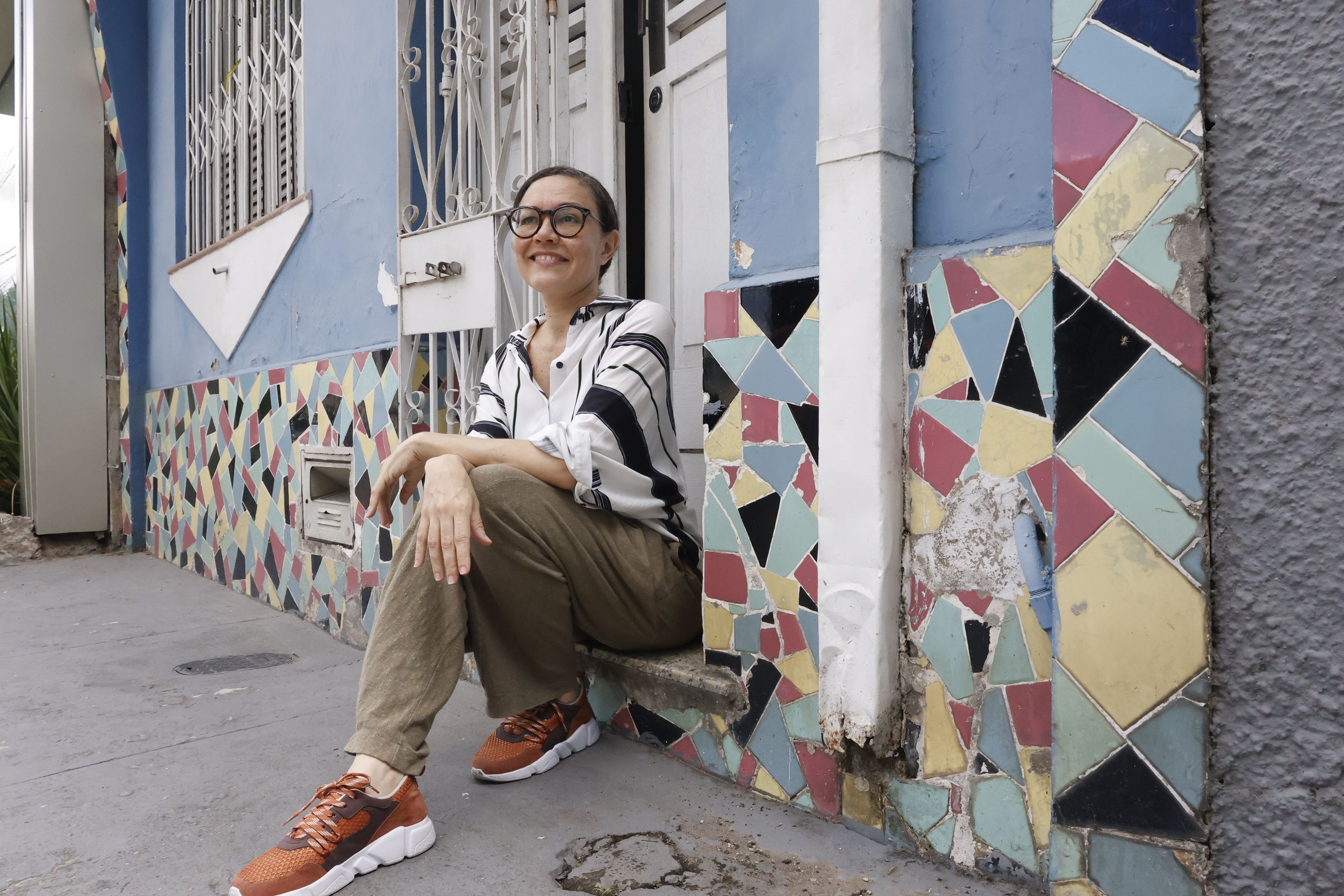
Its main characteristic was the use of colorful ceramic tile fragments applied to house facades, forming mosaics, generally with geometric patterns. Many of these fragments took on triangular shapes, evoking the image of lightning bolts, though other compositional arrangements were also employed. The preferred location for the application of these panels was the parapets, extensions of the exterior wall that conceal the roof and ultimately function as a kind of framing element for the house facade.
Because it is such a distinctive architectural style of the city, Raio que o Parta was recognized as Intangible Cultural Heritage of Belém by means of a law enacted in November, 2025. But how did this movement emerge? And why does it bear a name that sounds more like an insult?
ADAPTATIONS
Within the field of Architecture, the modernism movement adopted, among its visual languages, the construction of panels composed of ceramic tiles. Athos Bulcão, Cândido Portinari, and Burle Marx were among the artists of the period responsible for works of this type. For this reason, in Belém and other cities in Pará, architects, engineers, and especially workers such as master builders and bricklayers chose to incorporate this trend into their constructions, with certain particularities.
According to architect Laura Costa, Professor at Instituto Federal do Pará [Federal Institute of Pará], it is uncertain when exactly the style started to be adopted, but it is estimated to have emerged between the 1940s and 1950s. “In Belém and in the municipalities in the (state) interior, during that period, there were houses that already evoked a more futuristic aesthetic and appropriated elements of modernism, such as inclined columns, inverted roofs, ventilation ducts, the use of colorful cobogós as well as colorful ceramic tile panels on facades, often forming geometric designs and even representations of plants and animals,” explains the professor.
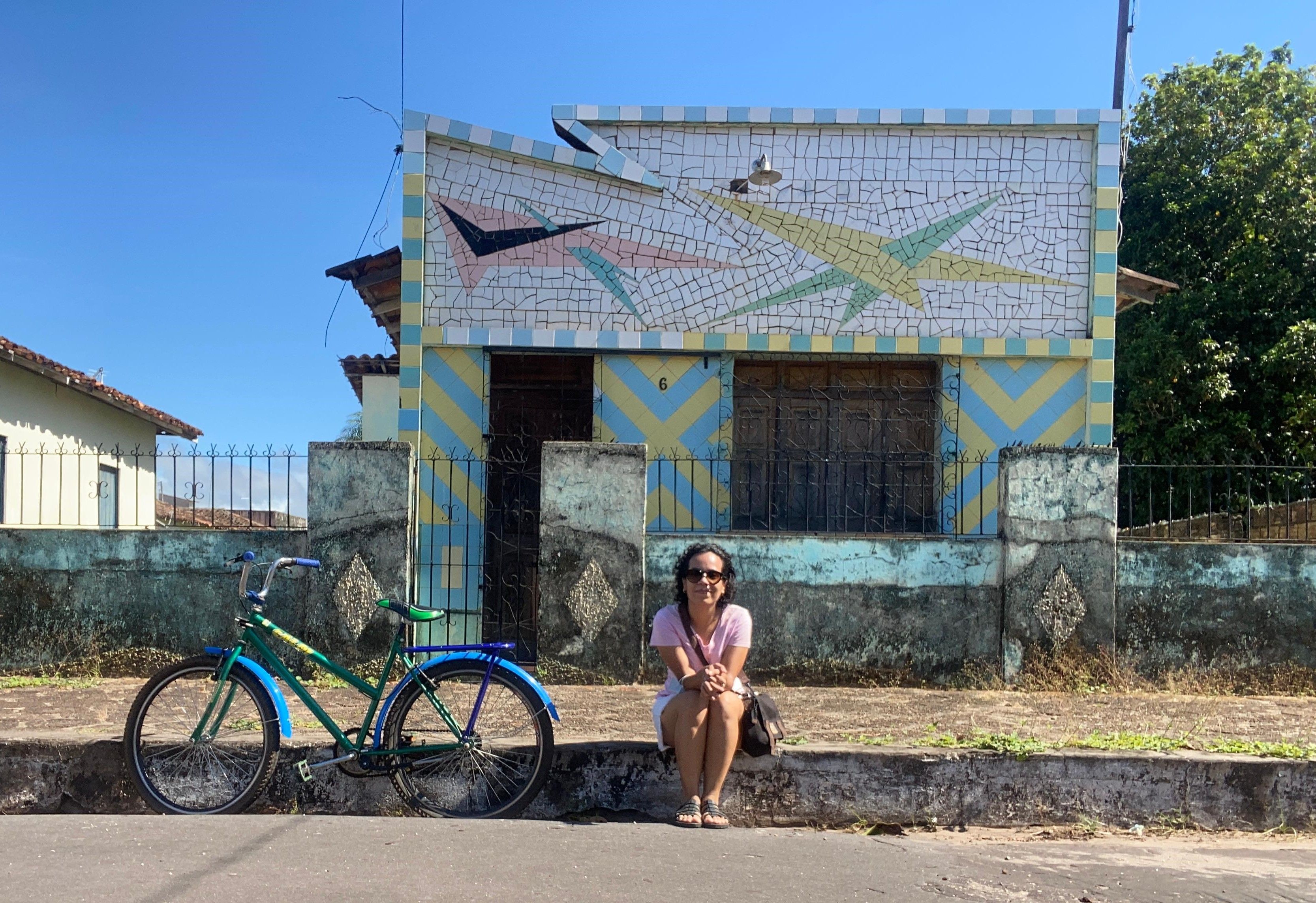
Architect Gabrielle Arnour, a member of the Raio que o Parta Network, an initiative dedicated to mapping and preserving this heritage, explains how modernism acquired regional adaptations. “Modernism was an architectural style largely produced by engineers and architects and, in most cases, restricted to local elites. Here, however, it incorporated popular social strata, driven by a desire to modernize houses in accordance with the architectural language of the period,” she explains.
In the pursuit of the trend of the moment, two facts took place. The first was the establishment of the state’s first school of Architecture, which trained architects already inclined toward more regionally grounded modern constructions. “The second is that due to our geographic location, ceramic tiles transported over long distances by road often arrived broken. These fragments, even when damaged, were incorporated into buildings to compose the panels. Although these houses were designed by architects and engineers, it was the master builders and bricklayers who actually carried out the work and produced the panels. As a result, this practice spread among popular social strata, using a material that was readily accessible”, she explains.
Laura adds that Raio que o Parta incorporated characteristics of modern architecture though keeping connections with more traditional construction techniques and spatial solutions. “That is why we refer to it as a hybrid architecture: it combines vernacular knowledge [practical, popular, and local know-how] with modern references,” she emphasizes.
The origin of the name
According to Laura Costa, who researches Raio que o Parta, the name was identified in texts written by architects in the 1960s and 1970s, who use the expression in a pejorative manner. “It was a way of expressing the negative opinion they had about these works, referring to them as ‘raio que o parta architecture’ or a ‘sea of vulgarity,’ since they were created by master builders, bricklayers, and other non-specialists, including the homeowners themselves,” she explains.
Architect Gabrielle Arnour, in turn, states that there are several versions regarding the origin of the name. “The most widely circulated account is that the term was coined by an architect from Rio de Janeiro during one of his visits to Belém to discuss the architectural production in the state, at the recently established school of Architecture. Many claim it was Donato Mello Júnior, who allegedly remarked that it ‘was not architecture, not even in the raio que o parta [in hell!]. From that point on, the name stuck, not least because it matched the movement’s own characteristics, which often featured lightning bolt and arrow motifs. Today, however, this pejorative meaning has been re-signified,” she recalls.
CHARACTERISTICS
Laura is one of the authors of the book Raio que o Parta – Uma arquitetura marcante no Pará, [Raio que o Parta – A striking architectural style in Pará], a work that brings together fifteen years of research on the subject conducted by the Laboratório de Memória e Patrimônio Cultural - (Lamemo) [Laboratory of Memory and Cultural Heritage] at UFPA, as well as studies developed by the School of Architecture and Urbanism and the Graduate Program in Architecture and Urbanism at the same university.
According to the Professor, because Raio que o Parta is an architectural form produced by both trained professionals and non-specialists, a wide range of characteristics can be identified. “These range from the use of taipa de mão (wattle and daub) to concrete as a construction technique. What these houses share, however, is the presence on their facades of lightning motifs or other figurative forms, which may be created using ceramic tile mosaics or, in some cases, directly from cement, as it is quite common in examples found in Bragança, in the interior of the state of Pará,” she notes.
The research also indicated the use of specific colors. “These corresponded to what was commercially available at the time, generally in vibrant shades of blue, lilac, pink, yellow, red, green, and black. When arranged side by side in different sizes, they form panels that adorn many facades and do not go unnoticed by those walking through the streets of Belém,” the researcher adds.
The spread of the style to the state interior
Although it is more commonly found in Belém, Raio que o Parta Architecture was not confined to the capital of Pará. “We have records in the Marajó region, especially in Soure and Salvaterra; in Santarém; in Igarapé-Miri and Abaetetuba; and one occurence in Ananindeua. We can see that it was a movement widely disseminated throughout the state of Pará, and, via social media, we have also identified examples in Rio de Janeiro, Recife (PE), Bahia, and São Paulo. We cannot fully explain this spread, but there are some assumptions that these houses belonged to residents from Pará who migrated to those locations,” Gabrielle explains.
Investigations conducted by UFPA have identified an even larger number of cities. “In my research, carried out during my master’s and doctoral studies in Architecture at UFPA and as a member of Lamemo, I was able to identify examples in Abaetetuba, Igarapé-Miri, Bragança, Cametá, Soure, Salvaterra, and Santarém. There are also records of houses in Óbidos and Santo Antônio do Tauá. Every day, we discover another municipality in Pará that has its own example. Initially, our hypothesis was that Raio que o Parta was restricted to Pará; however, similar works are now evidenced in the Northeast and Southeast of Brazil. There are even reports of buildings in Venezuela that incorporate designs very similar to those produced here,” says Laura.
Popular architecture
For Gabrielle Arnour, the recognition of Raio que o Parta as part of Belém’s cultural heritage was extremely important. “Until then, there was no form of recognition or public policy focused on it. There is also very little discussion about architecture produced by the popular classes in our state, even though it has shaped part of the region’s architectural history. Therefore, this recognition represents a first step toward effectively protecting these examples, so that further forms of erasure, such as the removal of mosaics or even the complete reconstruction of house facades, which have become increasingly common in recent years, do not continue to occur” she warns.
Laura Costa also welcomes the recognition and the renewed appreciation of a movement that was once dismissed as having little value. “Today, a group of young architects, artists, and designers highlights the importance of this expression for Pará’s architectural culture. I believe this helped the movement to achieve recognition at the municipal level. But this process needs to go hand in hand with heritage education, sharing knowledge with residents and property owners about the importance of Raio que o Parta to the memory and history of Pará’s architecture, so these houses can be preserved,” she says.
Local resident produces a film about the architectural style
One of the residents of a Raio que o Parta house who is aware of the importance of preservation is designer Danielle Fonseca. Her family’s home, located in the Umarizal neighborhood in Belém, has featured the mural since the 1960s. “The original building dates back to 1893, but in the 1960s my great-grandmother, Leonor, took the initiative to modernize the house with Raio que o Parta. She wanted to follow the trend of the time and noticed that houses were adopting this colorful style, so she had it done. As a result, our house stopped being colonial and became modernist,” she recalls.
Until the 1990s, Danielle did not know that she was living in an example of the movement. “It was a friend of mine, Jorge Eiró – a visual artist and architect – who, while passing by my house, told me a bit about its history and even delivered a class to one of his groups right in front of it. From then on, I learned about the subject and became interested in it,” she says.
Danielle became so involved that she ended up producing a short film on the subject. Titled Um céu partido ao meio [A Sky Split in Two], the film refers to the pejorative name given to the movement, associated with the idea of fragments breaking apart. The film was commissioned to celebrate the centenary of the Brazilian Modern Art Week in 2022. The work seeks to promote Amazonian modernism through a poetic approach, she explains.
Danielle assures that she and her family intend to preserve the heritage. “We will certainly maintain and protect it. I am very proud of what my great-grandmother accomplished, and preserving this means preserving memory, not only that of the family, but also that of the city,” she emphasizes.

NETWORK
The Raio que o Parta Network, conceived by Gabrielle together with fellow architects Elis Almeida and Eliza Malcher, emerged in 2020 out of the concern towards the erasure of some examples of the Raio que o Parta architecture in the city. “This situation bothered us so much that we decided to catalogue and photographically document Raio que o Parta buildings in Belém. We walked around, talked to residents, and most of them did not know they were living in such an example. We have already managed to map more than 200 houses in a collaborative way, not only in Belém. They are all available on our Instagram. Our first project was to create an informational booklet on the topic, and today we give lectures, workshops, training sessions, manage discussion groups, and mosaic workshops that refer to Raio que o Parta,” Gabrielle explains.
“We call ourselves a network because our intention is precisely to weave connections among residents, professionals, and everyone interested in spreading the importance of this movement. It is a way of keeping this aesthetic language so characteristic of our city alive,” the architect concludes.
INSTITUTIONAL PARTNERSHIP
The production of Liberal Amazon is one of the initiatives of the Technical Cooperation Agreement between the Liberal Group and the Federal University of Pará. The articles involving research from UFPA are revised by professionals from the academy. The translation of the content is also provided by the agreement, through the research project ET-Multi: Translation Studies: multifaces and multisemiotics.