Next weekend, between June 26 and 28, the city of Parintis in the Amazon will once again host what is considered the largest open-air folklore spectacle in the world: the Parintins Festival.
The festival has been held since 1965, in the format of a historic dispute between two groups of boi-bumbá [oxen]: Garantido, represented by the red color, and Caprichoso, symbolized by the blue color.
The festival lasts three nights and includes music, dance, visual arts, theater, allegories, Amazonian legends, indigenous rituals and elements of caboclo culture. "It is a celebration of Amazonian identity that has transformed a popular street game into a great cultural spectacle," says Allan Rodrigues, professor at the Faculty of Information and Communication of the Federal University of Amazonas (UFAM).
HISTORY
In Parintins, the rivalry between Garantido and Caprichoso has existed since the beginning of the 20th century, when the two oxen were created (in June and October 1913, respectively). At the time, the presentations were simple, in the form of a procession through the city streets. Only in 1965, the festival adopted the current model of confrontation between the rivals, at the initiative of young people linked to the Catholic Church who sought to raise funds for the construction of the city's Cathedral.
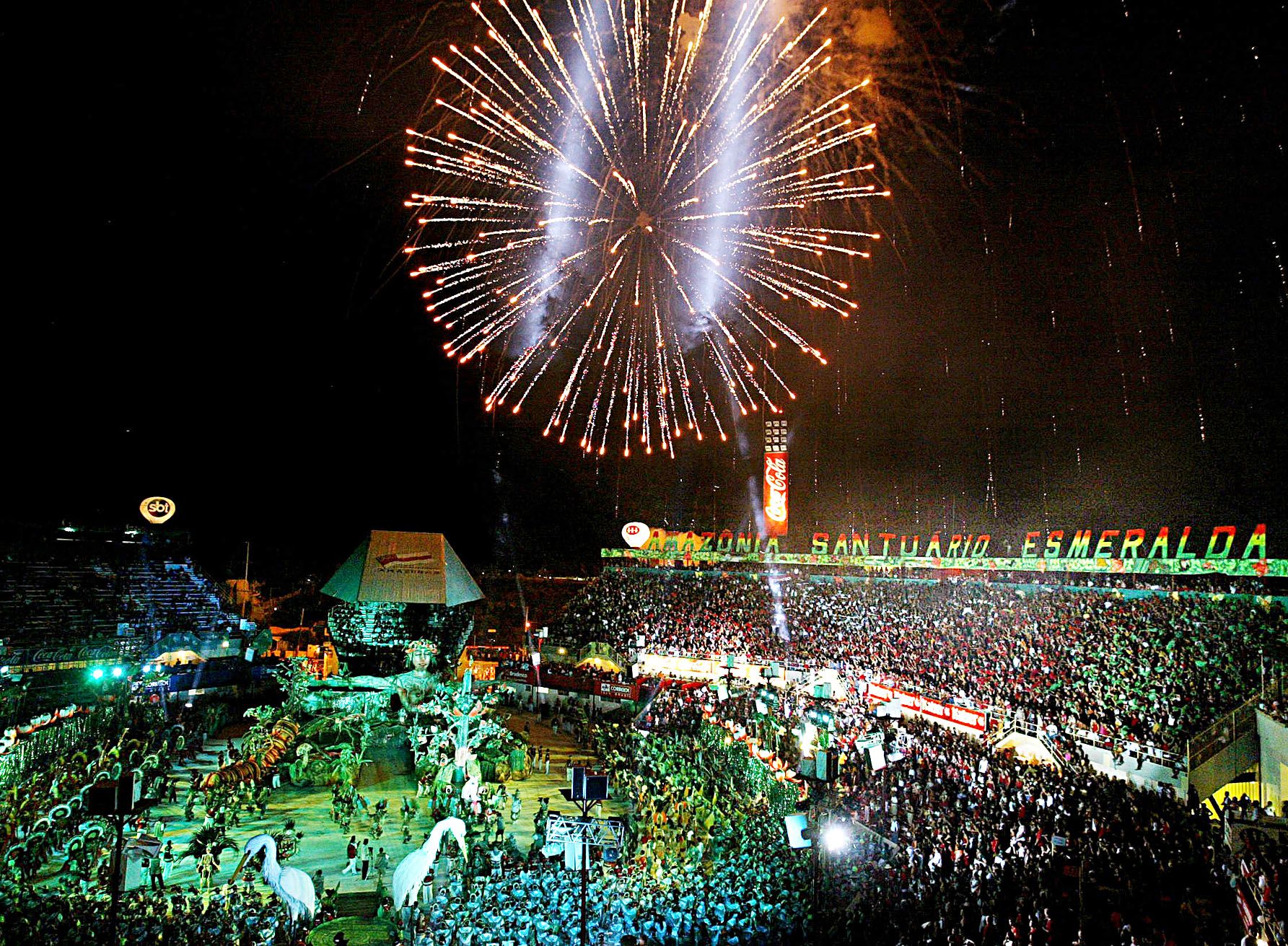
Since then, the festival has grown in size and visibility every year. For a long time, it was held at various locations in the city, until, in 1988, it gained its own arena for the performances: the Bumbódromo, which holds about 20,000 people and is recognized as a Cultural Heritage of Brazil by the National Institute of Historical and Artistic Heritage (IPHAN).
Professor Allan Rodrigues is the author of the book-report Boi-bumbá: Evolution, which traces the transformations that have occurred over time, converting a simple street game into a mega-spectacle of international visibility that attracts thousands of tourists.
“The main transformation was the change from the so-called ‘street ox’ to the ‘spectacle ox.’ The festival originated from a simple popular game, linked to the June festivals and local communities, but it has incorporated new artistic languages, technology, scenography, and professionalization. Despite this growth, the most interesting thing is that the festival has preserved its essence: it continues to tell stories of the Amazon and express the cultural identity of its people,” says Rodrigues.
“One of the greatest cultural symbols of the Amazon”
Over the three nights, the two teams present dances, ox songs, floating cars, and other elements in the arena. The judges focus on several prominent elements that determine the winning ox of that year.
The judging panel evaluates a total of 21 elements, among which the following stand out: the toada song leader; the percussion group or marujada; the amo do boi [ox master] and the sinhazinha da fazenda [the daughter of the farm owner]; the cunhã-poranga, a representation of an indigenous warrior woman; the lyrics and music of the songs; the shaman; the tuxauas, who represent indigenous leaders; in addition to the floats, set design, and performance of the galeras, that is, the cheering public of each team.
For Allan Rodrigues, the Parintins Festival is now one of the greatest cultural symbols of the Amazon and a reference for Brazil. “Besides valuing popular traditions, it boosts the regional economy, generates thousands of temporary and permanent jobs, strengthens sectors such as hospitality, transportation, gastronomy, handicrafts, and cultural production. It also projects the image of the Amazon internationally, attracting visitors and investments to the region,” he analyzes.
RIVALRY
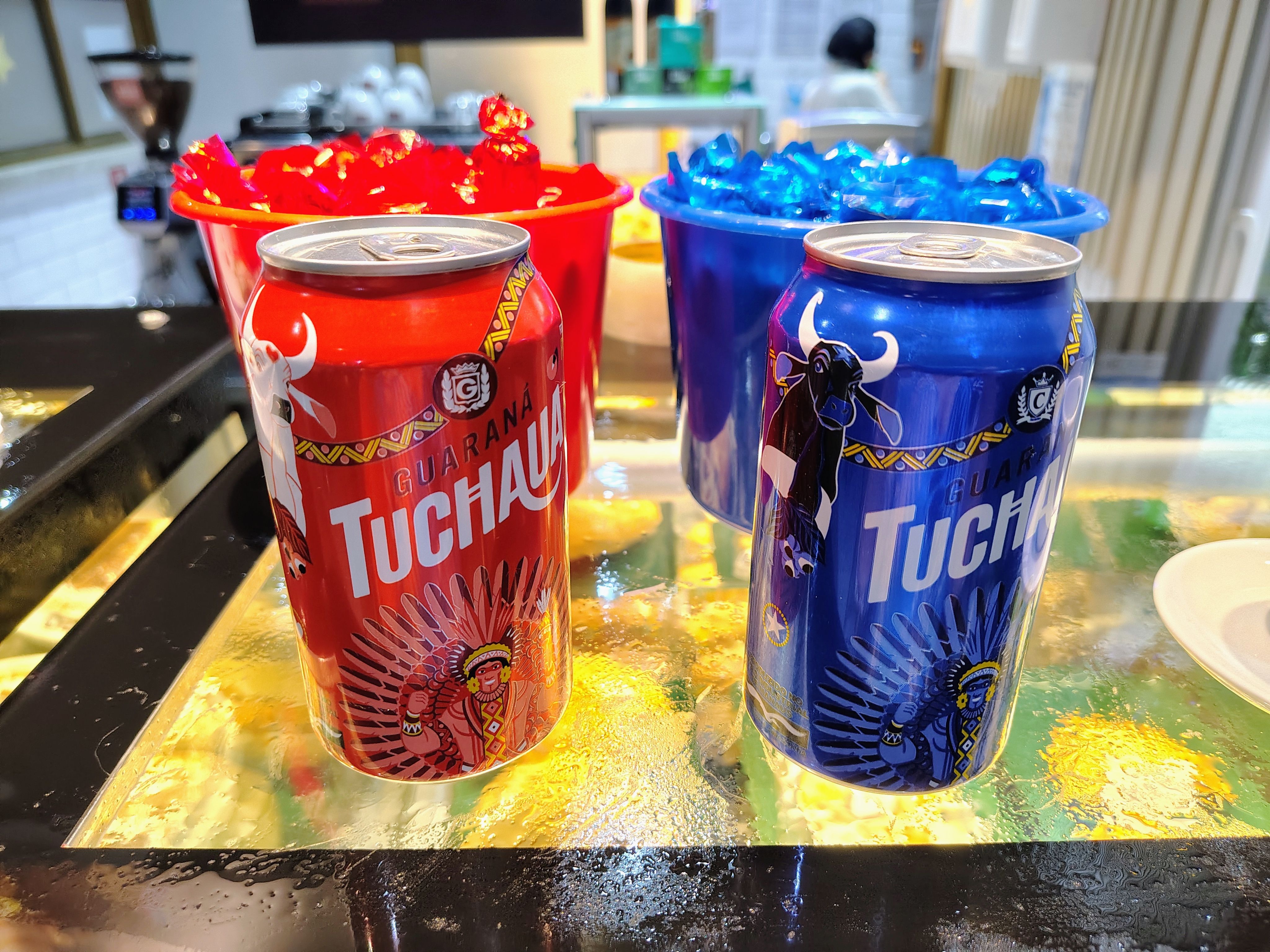
In the Amazon region, the rivalry between the two oxen is famous. Fans of the clubs reject the opponent's colors. It is not permitted to wear blue to the Garantido warehouse or red to the Caprichoso warehouse.
The rest of the city is also painted in the colors of oxen, especially near the festival. There are pedestrian crossings painted half each color, as well as sidewalks and signposts. Products also adopt specific packaging in red or blue, to please both audiences. Even large brands, traditionally associated with the colors red or blue, need to adapt, such as Coca-Cola, Lojas Americanas or Azul Linhas Aéreas, which temporarily modify their brand colours during the festival period. The fact became a well-known marketing case in the country.
"The rivalry between Garantido and Caprichoso is one of the festival's driving forces. It goes beyond the arena and manifests itself in the city's daily life, influencing customs, consumption, decoration and even company communication strategies during the festival period. However, it is a symbolic and cultural rivalry. It helps to strengthen the fans' sense of belonging and contributes to keeping alive the popular passion that sustains the festival", highlights Rodrigues.
The oxen evoke childhood memories
For Lucas Castanhola, a Manaus native and Garantido supporter, the festival evokes memories from his childhood. "Since I was 6 or 7 years old, my parents would take me to watch the rehearsals, both at the Garantido Corral and at the Caprichoso Bar," says the biologist. Both the Corral and the Bar are events preceding the festival, which take place at the Manaus Sambadrome.
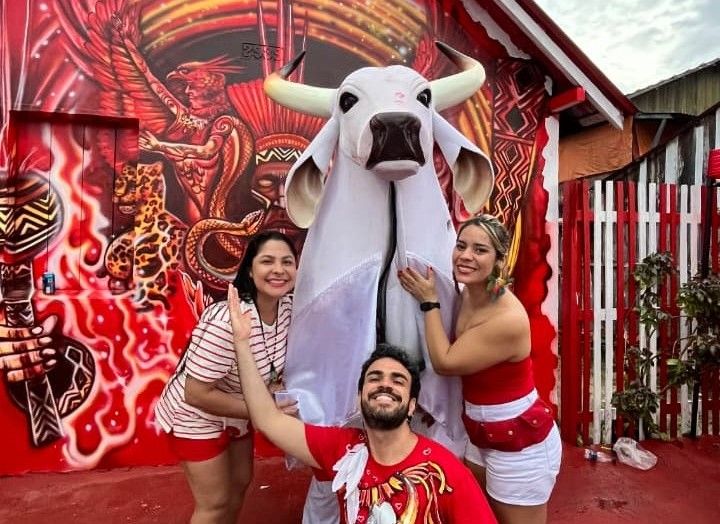
“Back then, the rehearsal was mixed, and my family was also divided in their support. When I was a child and a teenager, partly due to financial reasons, I only watched it on television. Only as an adult I could start following the festival more closely, and Garantido brought back those childhood memories. Besides attending the festival itself, I also started to attend the Alvorada do Boi Garantido, which is a festival in itself, and every fan should participate at least once, watching the sun rise at the Cathedral, seeing the ox perform in different parts of the city. It's like going back to your childhood,” he celebrates. The Alvorada do Boi Garantido is a procession that goes from the ox's cultural complex and travels through the streets of Parintins until it reaches, at dawn, the Cathedral of Our Lady of Carmo, the city's patron saint.
MARRIAGE
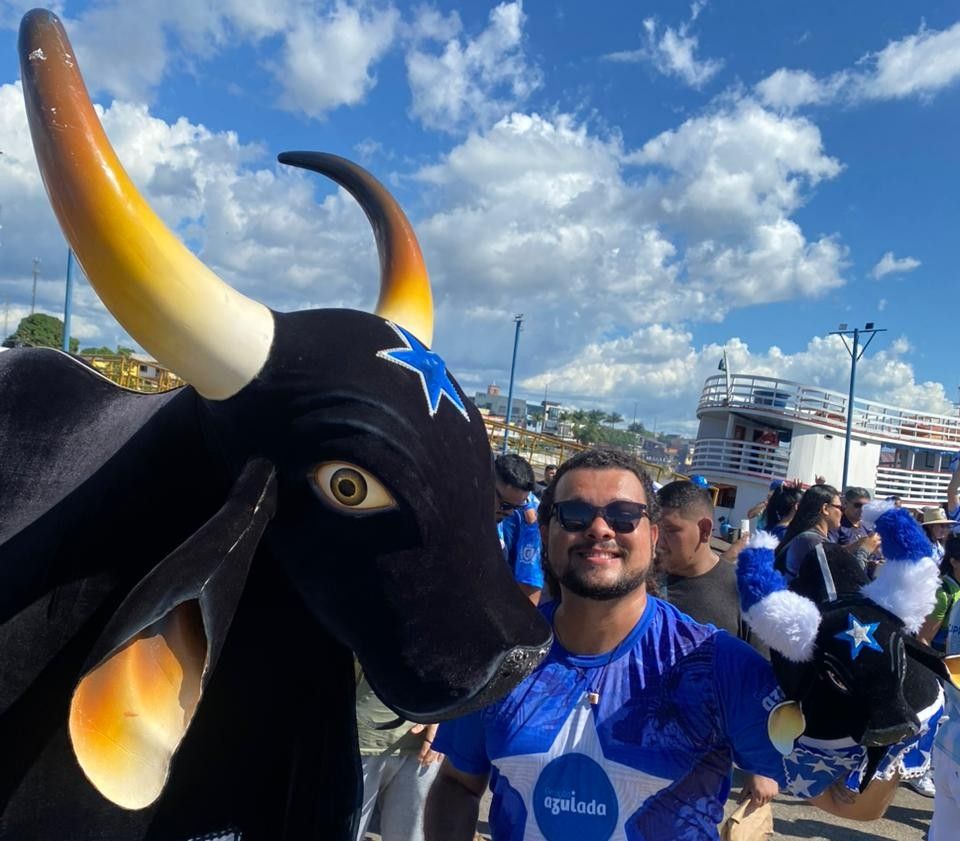
Thiago Barbosa, better known as Thiago Caprichoso, also has childhood memories related to the ox. “My story with Caprichoso began around 1998, during that great boom of the Parintins Festival in Brazil. I'm from Porto Velho, Rondônia, and my first contact with the culture of the bumbás occurred through a school project. It wasn't a family inheritance, but an immediate connection: right away I became fond of the Caprichoso ox and Arlindo Jr., who was a toada singer,” he recounts.
Now living in Manaus, Thiago is a member and fervent supporter of Caprichoso. “I make a point of going to Parintins every year, since 2018, to attend the festival and follow our blue and white nation up close. I also go to the ox's anniversary and the launch of the musical album. So, at least three times a year, I'm in Parintins,” he emphasizes.
Thiago's passion for the Caprichoso is so great that he and his partner, who is also named Thiago, used the elements associated with Caprichoso as decorations for their wedding. "It was the first wedding held at one of Caprichoso's locations in Manaus, Bar do Lourinho. The Caprichoso ox itself delivered the rings to us," he says, getting emotional.
Expression of Identity and Resistance
For Thiago Barbosa, Caprichoso and the festival are the purest expression of Amazonian identity. “Caprichoso is more than a folklore ox; it is a passion that moves life, a feeling of belonging and an enormous pride in the art, resistance and culture of our region. I learned a lot thanks to the festival and the themes that Boi Caprichoso addresses outside and inside the arena. The festival keeps alive our indigenous roots, legends, caboclo culture, the rescue of black identity and the defense of the diversity of the peoples that make up the North, projecting the Amazon to the world,” he says.
For Lucas Castanhola, the Festival is a voice of representation and struggle. “Analyzing the songs, we see how much the ox sings about the Amazon. It talks, for example, about areas of indigenous conflict, such as in the Javari Valley, where Bruno and Dom Phillips were killed. The ox has this role of bringing to light, to that arena, much about our Amazonian context,” he reflects.
PILLARS
For Professor Rodrigues, indigenous representation is one of the pillars of the Parintins Festival. “Throughout its evolution, the oxen have increasingly highlighted the original peoples, their histories, mythologies, rituals, and traditional knowledge. The festival has become a showcase for Amazonian ethnic diversity and for debates related to environmental preservation, the valorization of indigenous territories, and the harmonious relationship between humankind and nature. In many moments, the arena functions as a grand stage for the affirmation of Amazonian identity and the defense of the forest.”
INSTITUTIONAL PARTNERSHIP
The production of Liberal Amazon is one of the initiatives of the Technical Cooperation Agreement between the Liberal Group and the Federal University of Pará. The articles involving research from UFPA are revised by professionals from the academy. The translation of the content is also provided by the agreement, through the research project ET-Multi: Translation Studies: multifaces and multisemiotics.