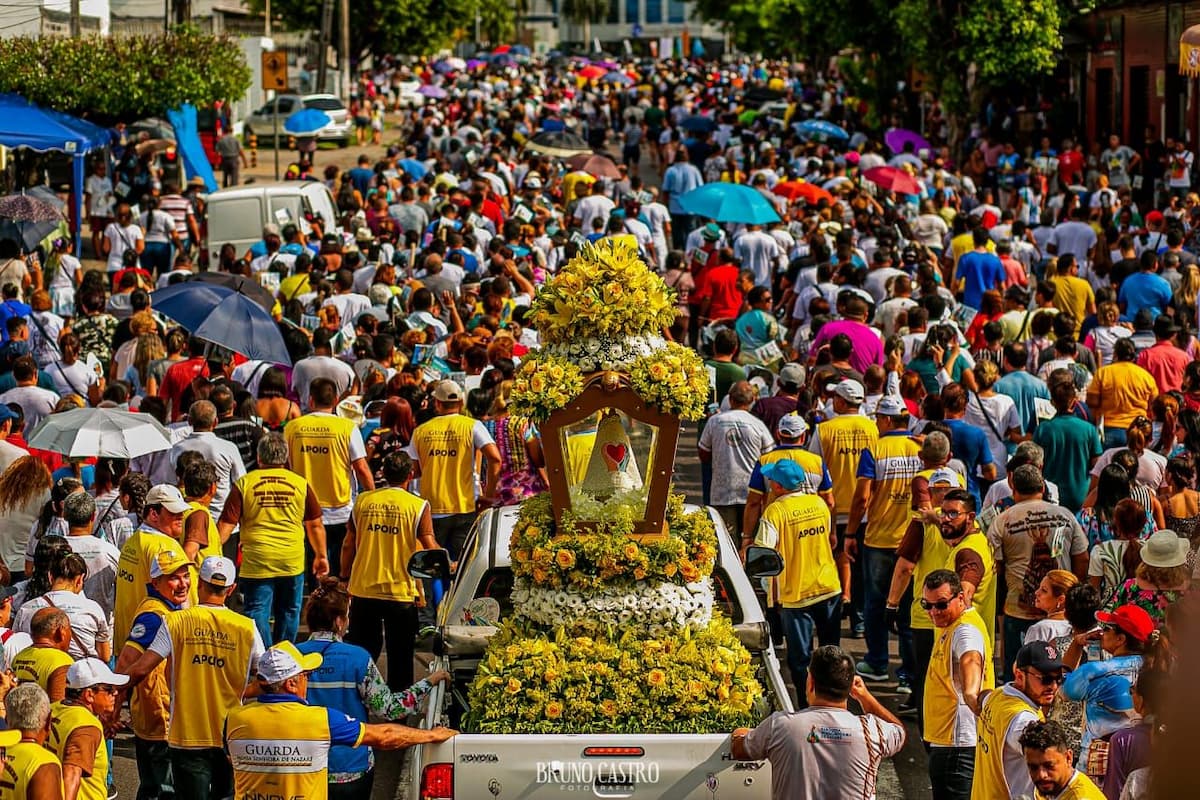
"Círios", the song written by Marco Aurélio and Vital Lima, refers, in the plural, to the many “October months” experienced by people from Pará, not only in the capital.
However, in an expanded interpretation, it could be a reminder of the plurality of feelings inspired by the Mother of Jesus throughout Pará, with celebrations that, even holding similarities, preserve unique peculiarities. And, in fact, there are many Círios. In São Miguel do Guamá, for example, the festivity always takes place on the last Sunday of November.
Parliamentary advisor Bruna Silva makes a point of always being present. She finds in the Virgin Mary the inspiration for humans to be agents of hope, guided by the Christian principles of donation and love for others. "It goes far beyond religion and Catholic doctrine. It's really beautiful to see the whole city involved in such a great demonstration of faith. I realize that even those who are not devotees or Catholic feel involved in the magic of Círio, which is very beautiful and special ", she says.
The preparation procedures for Círio last all year, with the end of one celebration comes the planning of another. The event usually brings together 40,000 people along the streets, avenues and alleys of São Miguel do Guamá, according to the organization's estimates. There are similarities with the ‘Círio da Virgem de Nazaré’ in Belém. On a Saturday, the “Fluvial Pilgrimage” leaves the rural community of Acari, blessing residents furthest from the city center and also those living along the riverbanks of the Guamá River. Upon arrival, the “Motorromaria” takes place. It leaves the border of the city and goes to the sanctuary where the mass of the Saint’s transfer [Missa da Trasladação] takes place, another official procession. On Sunday, the car with the ‘icon of faith’ leaves the Main Church of São Miguel Arcanjo and is taken on a five-kilometre walk surrounded by believers. And there are also several post-Círio events at Largo de Nazaré that includes open-air masses and cultural evenings.
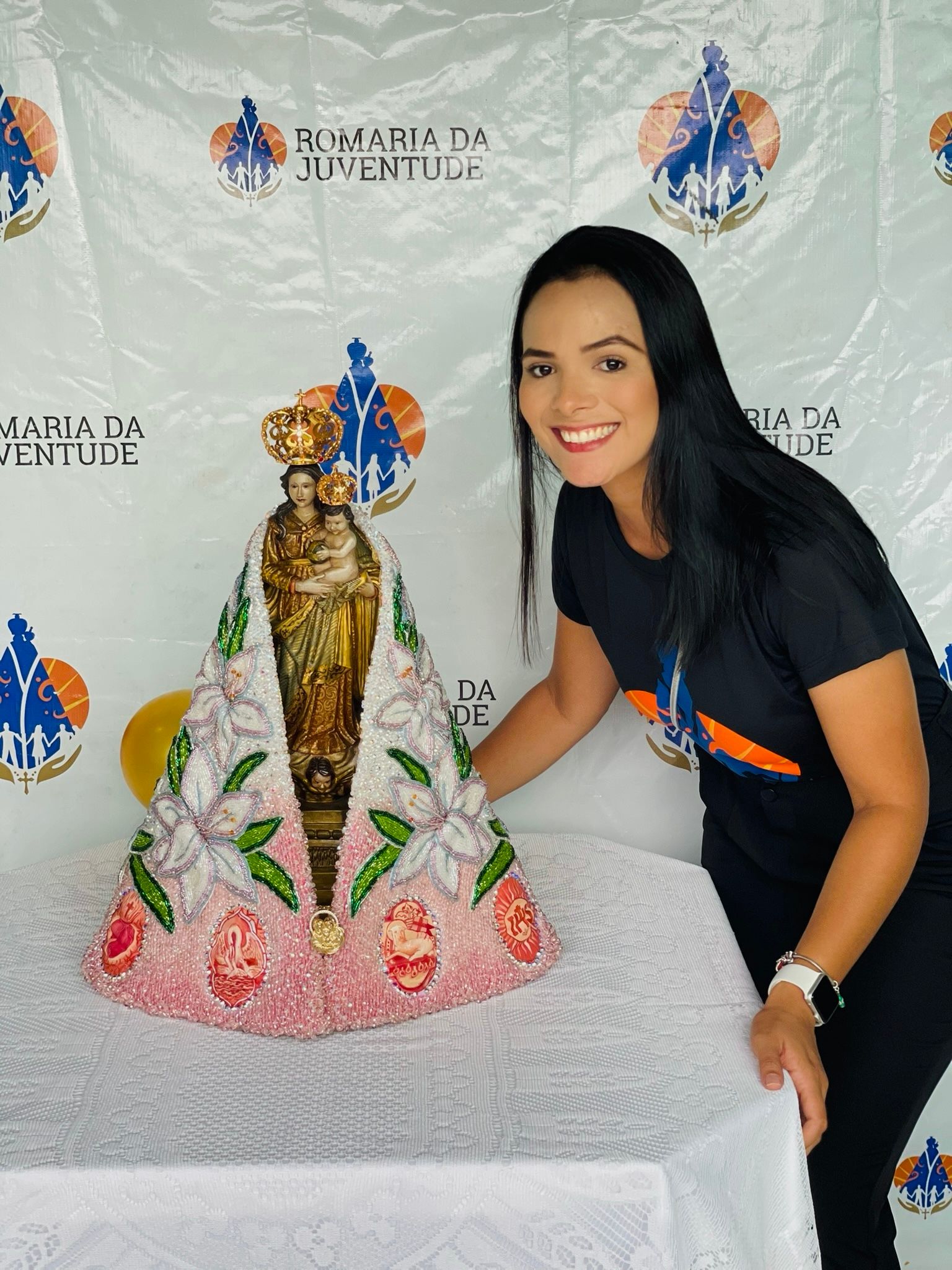
"Honestly, it's difficult to find words. I end up expressing myself through tears when I bring up the subject. Mary, being the Mother of Jesus, brings significant representation to us. She is a channel of grace for our salvation. An example of unconditional benevolence for the mission given to Her. Her love is an example, because, serving the church and others is not an easy journey, but what is given to us in outpoured graces is worth it. Not long ago, my mother went through a problem of health and it was a moment in which I felt much more connected to Our Lady of Nazareth. I felt very supported and welcomed. This proximity between us fills me with gratitude. And being able to experience the Círio made my expectations grow, after the recovery of my mother. And it was an even more special Círio, I was much more connected with my mother and the Virgin Mary. It was a grace achieved after a delicate health problem and I am very grateful to be able to thank for everything on the streets of São Miguel", she says.
Castanhal brings together around 350 thousand devotees in pilgrimage
The bishop of Diocese of Castanhal, Dom Carlos Verzeletti, does not hide his excitement when speaking about Our Lady of Nazareth. He recalls that the majority of parishes linked to the Diocese of Castanhal, in the northeast of Pará, pay homage to the “Patron Saint of Pará”. "We have the oldest parish at Vigia de Nazaré, which is a tribute to Our Lady of Nazaré, as well as the one located in Magalhães Barata. The same happens in Quatipuru. And even the parish in the city of Capanema, more recently founded, about six years ago. All of them are for the Virgin of Nazareth. The other ones are over 100 years old. In other words, our northeast of Pará is almost entirely dedicated to Her who deserves it", says the bishop.
Around 25 years ago, when Dom Carlos was still an auxiliary bishop of the Metropolitan Archdiocese of Belém, the idea of a Círio for the Virgin of Nazaré came up in the municipality of Castanhal. But, with the proximity of Belém and the strong connection between Belém and Castanhal residents, Dom Vicente Zico, the metropolitan archbishop of Belém at the time, suggested calling the manifestation of Marian faith a “pilgrimage”, which also ended up encompassing the festival of the diocese and the celebration for the patron saint of the city – Mary Mother of God. Over 350 thousand devotees follow the image of the Virgin of Nazareth in the main procession, which takes place on the third Sunday in October. In addition to the upcoming dates, the connection between Belém and Castanhal is due to the arrival of pilgrims from cities in the northeast of Pará to Belém, who start their walking journey days before the Círio procession held in the capital of Pará.
"Our Lady of Nazareth is present everywhere, not just in big cities. She is in small communities, in the most distant places. No other woman is so loved and cherished in the whole world and everywhere. There are so many sites dedicated to Our Lady. And this is a sign of love. People identify with Her tenderness and affection and turn to Her lap when they need it. The Círio in Belém is such an important event that it leaves marks everywhere. In small towns, the story is almost always the same: it starts with someone saying that they went to the Círio in Belém and came back very excited. And this person convinces people to make their own Círio", he says.
Círio is followed by thousands of devotees in the city of Vigia de Nazaré
There is a city which carries devotion to Our Lady in its own name – Vigia de Nazaré. The city has existed for 407 years and researchers estimate that the population has held celebrations and pilgrimages in homage to Our Lady of Nazareth for at least 326 years. In Vigia, the Círio procession is a little shorter, lasting approximately two hours. It usually has around 60 thousand pilgrims on the second Sunday of September. Nélio Palheta is a journalist and has studied the Círio in Vigia for decades. He recalls that the celebration is extremely important for the Catholic canon in the Amazon, but also states that there is a lack of further investigation and official documents about the beginning of the celebration.
"I trust the version of (Jesuit João Filipe) Bettendorf, copied by Serafim Leite. According to the document which he affirms was signed by Father José Ferreira, devotion to Our Lady of Nazareth in Vigia has existed since 1697, with litanies and pilgrimages. But the word Círio was not used. They were settlers who came from the Azores (Portugal) and brought the image that is still venerated today. But the image is made of distaff, it is not an image carved in the baroque style like the one in Belém. However, the kind of legend is the same as the devotional foundation of Belém, with the image found in a branch of the river. There are other peculiarities in Vigia, such as the ox carriage opening the procession and fireworks, in addition to the character of the “Angel of Brazil”, which is always a young woman riding a horse, wearing a green and yellow tunic with the national flag", Nélio says.
Nélio believes that so many “Círios de Nazaré” spread throughout the State is evidence that Amazonian devotion is one of the most deep-rooted in Brazilian Catholicism. "In my opinion, devotion spread more due to popular religiosity than due to an evangelizing strategy planned by the church. Vigia is a founding ethos of this popular religiosity, in addition to Belém", he says, remembering that other municipalities have very representative Círios such as those of Castanhal, Marabá and Capanema. (E.L.)
In Marajó, Catholics pray for the patron saint in Soure

There are plenty of processions and pilgrimages throughout the Marajó Archipelago, which encompasses 16 municipalities in the State of Pará. In Marajó, there is also a special time dedicated to Our Lady of Nazareth, during the “Círio de Soure”. In this municipality, the celebration takes place on the second Sunday of November.
"I see that the celebration is very similar to the one in Belém, except for being smaller. The real difference, which brings beautiful symbolism, is watching devotees riding horses and buffaloes, opening the way to the “berlinda” [the saint’s carriage], says Heloísa Martins, who is Catholic and works as municipal secretary of Tourism.
Since 1890, the devotees have paid homage to Our Lady of Nazareth. This tradition began in the city of Pacoval, by the couple Aniceto and Gertrude Gomes. They both were devotees and always held “novenários” [sets of nine-day prayers] in the month of November. The couple donated a land allotment to the church in 1888, for the construction of a chapel. So, the community around it has increased, consolidating the devotion to Our Lady of Nazareth with festivities inspired by the Círio de Belém. The celebration was recognized as intangible cultural heritage of Pará by the State Legislative Assembly.
"It is estimated that the celebration gathers around 10 thousand people, which is a lot for the estimated population of 26 thousand inhabitants. It is a joyful time, because we receive many visitors and tourists and relative’s houses are full. Hotel reservations need to be anticipated. We have a fair and the smell of maniçoba invades everywhere. I feel happy to see people on the streets because faith is everything in our lives. Faith is what brings us hope. I get emotional to talk about it, because I have been blessed many times.
When I got married and wasn’t able to get pregnant, I made a promise to fulfill if I got pregnant. I became pregnant in that same month. From then on, I became even more devoted. It is a time when the entire population expresses their faith and we feel that light atmosphere in the air. One thing that I find beautiful is seeing other religions absorbing this good atmosphere. We see some evangelicals giving water to devotees, for example, as is also seen in Belém. It is a time of unity and fraternity among people. It's happiness beyond measure. It could be like this all the time, couldn’t it? Círio during all year. Anyone who hasn’t been here is invited to come," she says.